
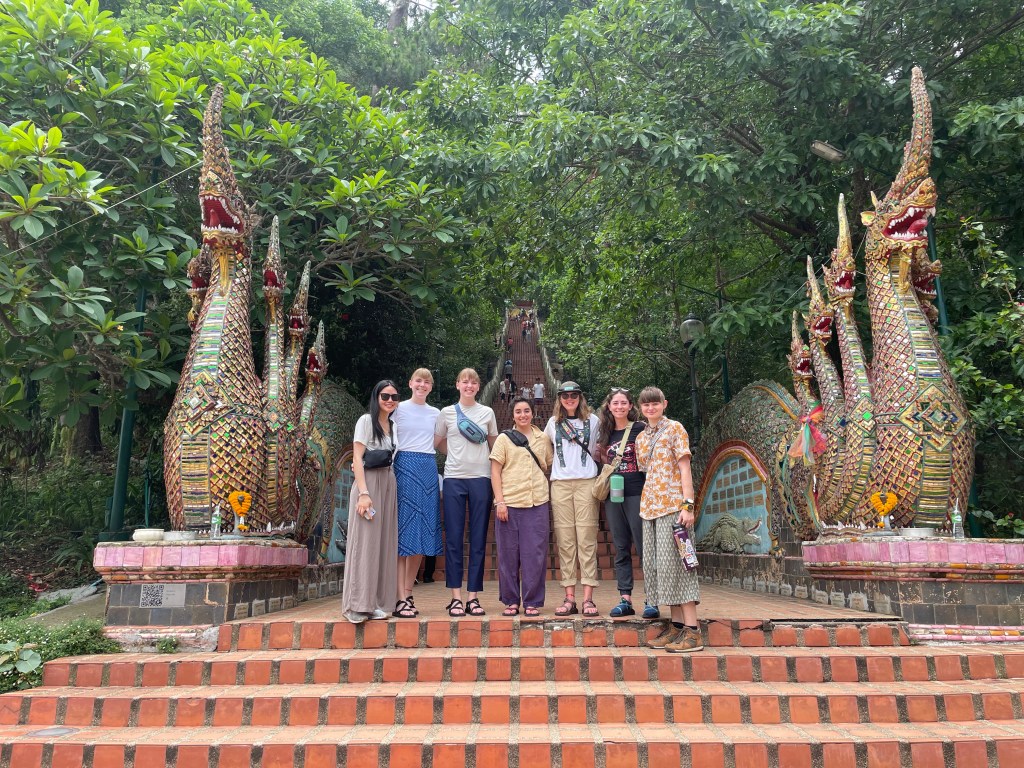
Thailand is hot and humid, especially in May and June. The monsoon season is just beginning, and the air feels saturated with moisture. It may not be quite as hot as August in Salt Lake City, but the humidity leaves you soaking after just walking a city block. It’s tempting to wear a t-shirt and shorts all the time. And if we were in the US, we would. But we’re not in the US.
In most of Asia, academics are considered at the highest level of achievement. Becoming a professor is highly respected, and there is a lot of status in being a university student. Undergraduate students are expected to wear uniforms. Luckily, we will be doing service work, so we won’t need to dress up as much. But be aware that appearances are important in Asia, and as Americans we really do dress casually (dare I say slovenly) compared to the rest of the world.
American tourists in particular seem to go out of their way to dress like….well…like tourists. There’s no other description. You can always tell who the American tourists are, and usually from a distance. We seem to insist on extreme casualness when on vacation. Maybe we want to escape the workplace so much, that we dress in completely opposite fashion. Granted, you will never completely pass as a native African or Asian, regardless of your clothing, but you can show respect and courtesy towards your host culture by dressing as they do, and putting as much emphasis to appearances as they do.
For women, it means erring on the side of modesty. Thai women are usually pretty covered up, even in the heat. Thai women avoid the sun, so they tend to wear long sleeves and long pants or dresses, and usually a hat. Even in the city, women typically dress modestly, with very few tank tops and short shorts.
For men, it’s usually long pants and a button down shirt, usually short sleeves, often untucked. T-shirts are fine, as long as they aren’t too loud or gaudy. Men usually don’t wear shorts in the city…
A word about shorts, especially for men. In much of Asia, men do not wear shorts after a certain age (usually the ‘tween years). Shorts are often associated with schoolboy uniforms, thus associated with being boys, not men. In Africa and Asia, where I have traveled extensively, men almost never wear shorts in public, unless they are at the beach, on the farms, or participating in some sort of recreational activity. Even in the hottest weather, men often wear long pants. This is changing as dress codes are liberalizing, but in general, men tend to wear long pants in the city.
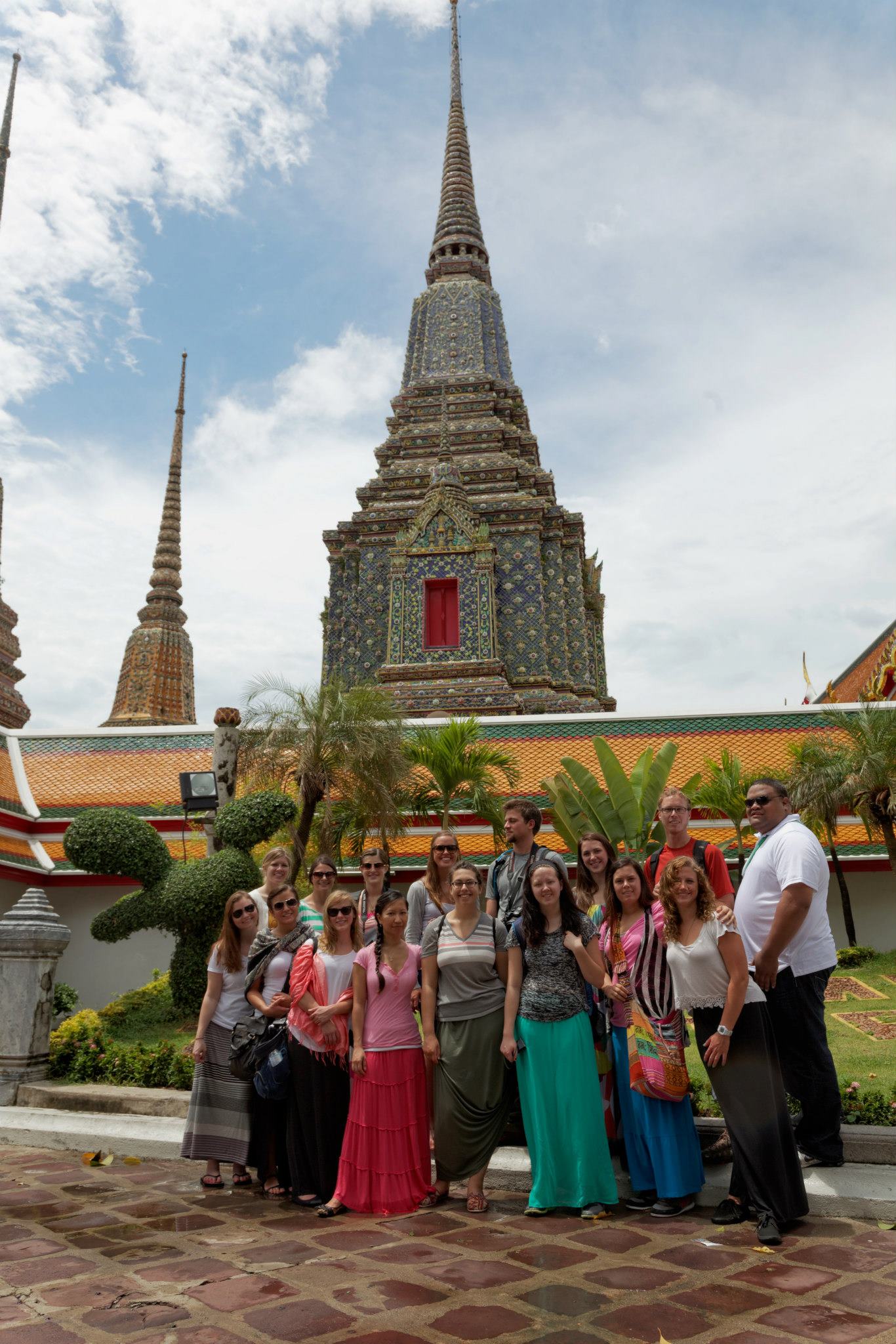
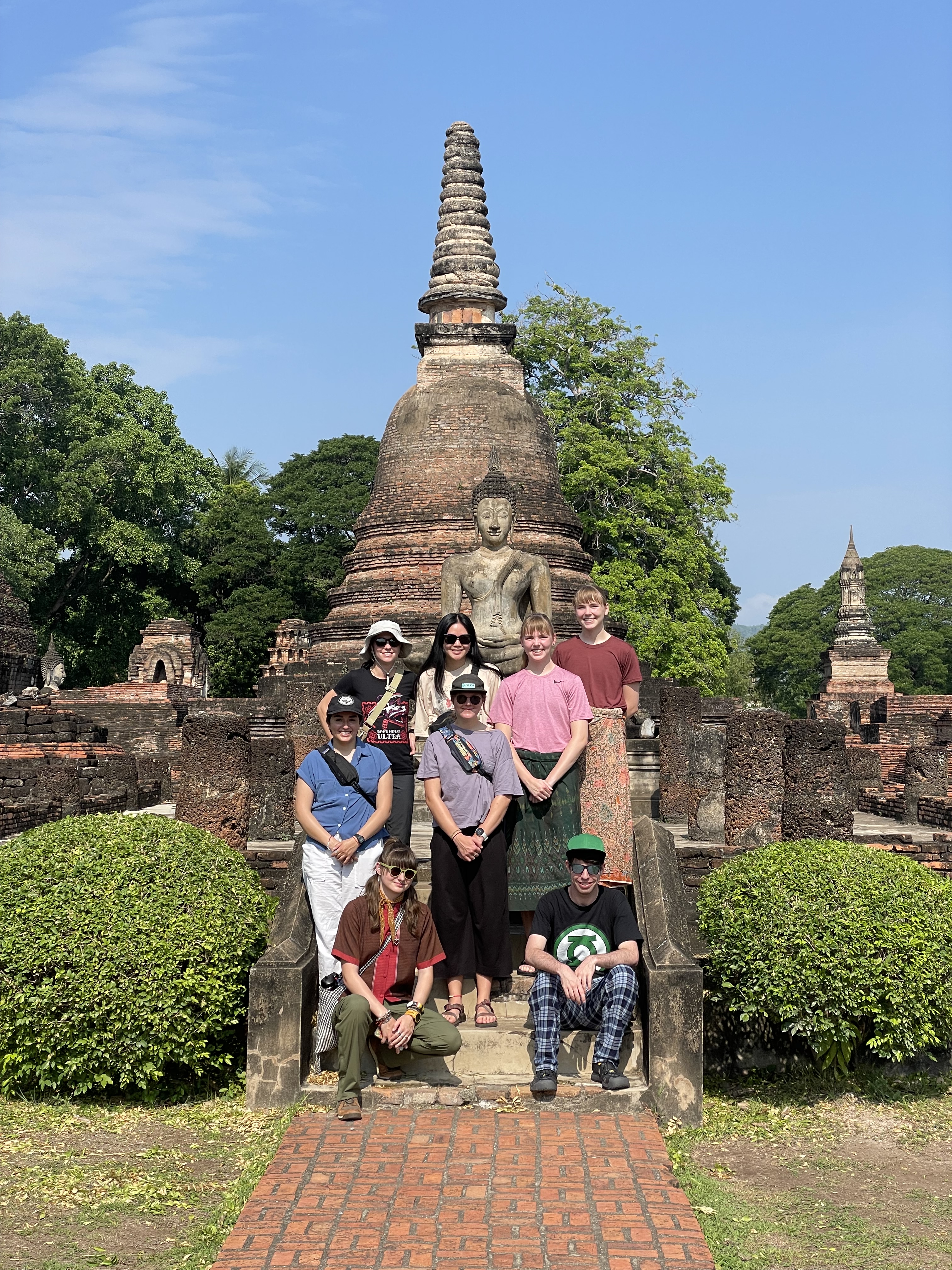
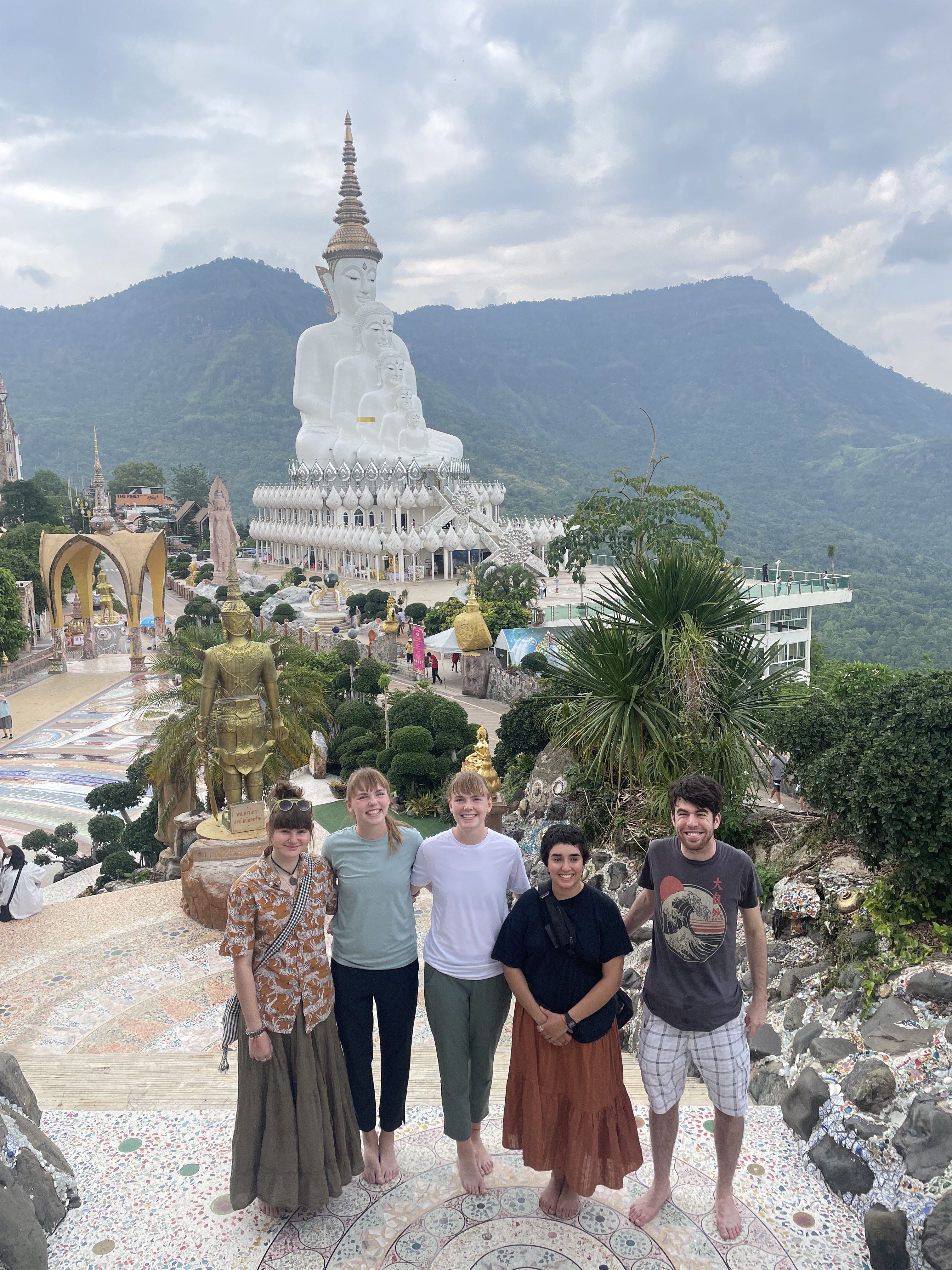
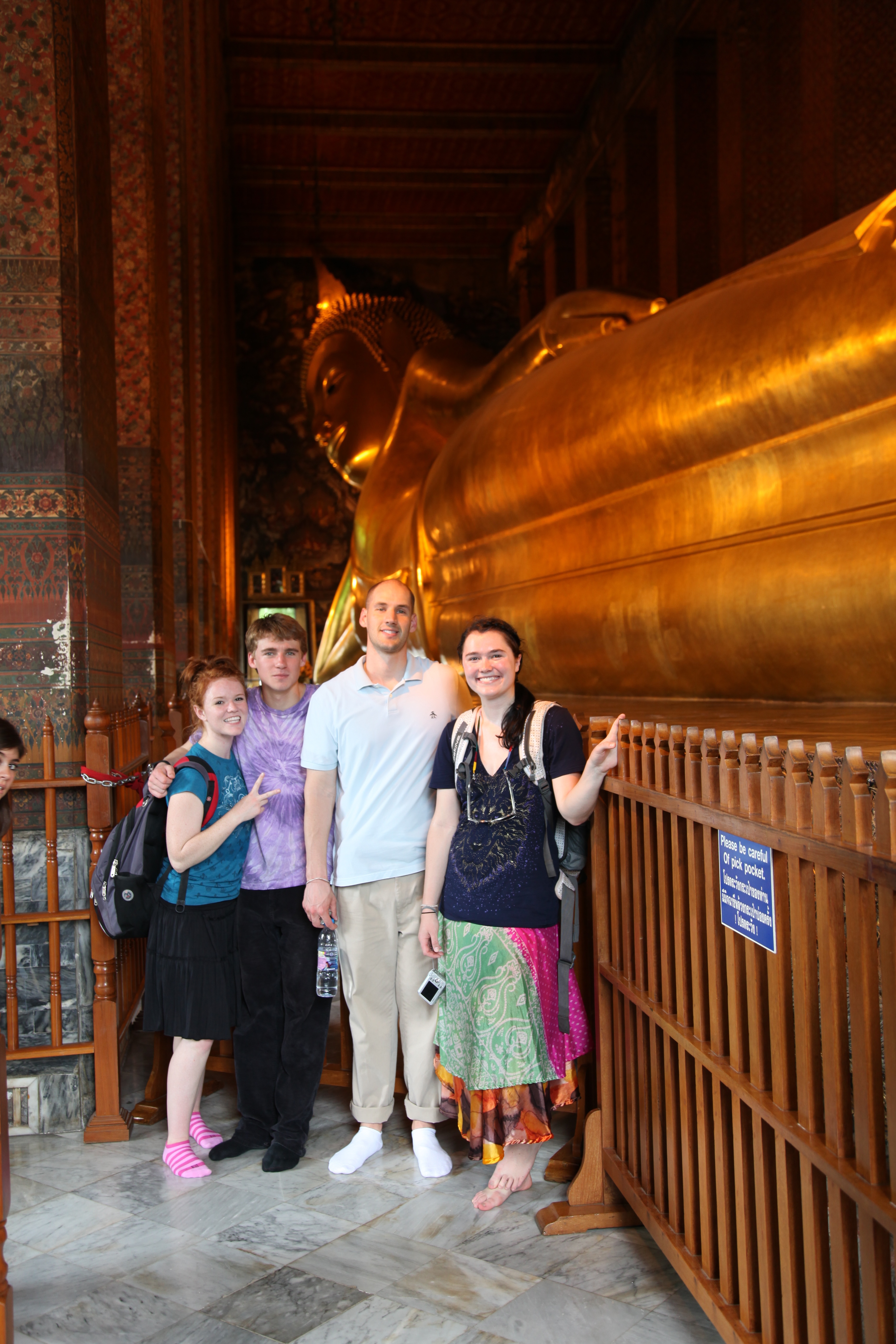
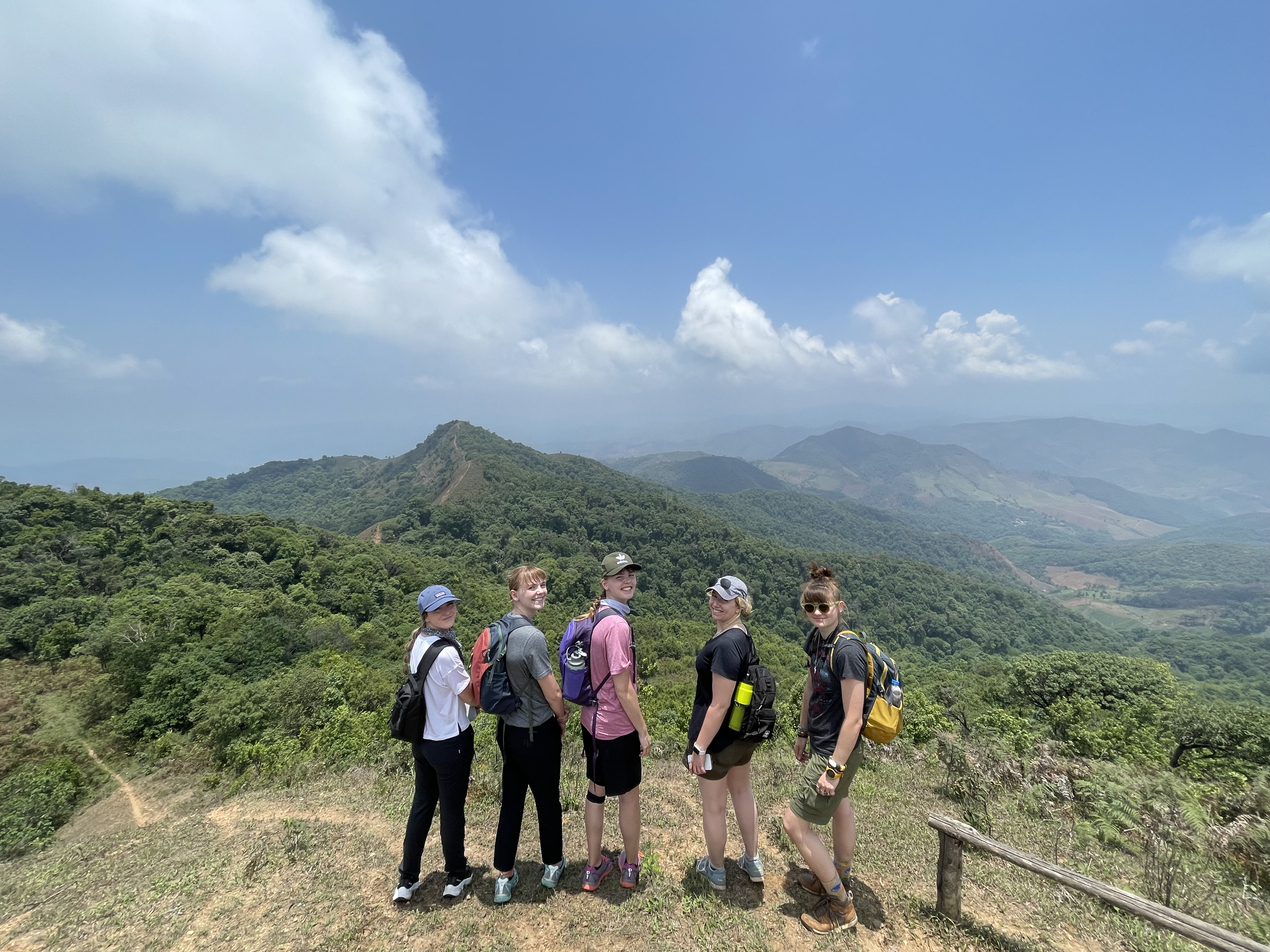
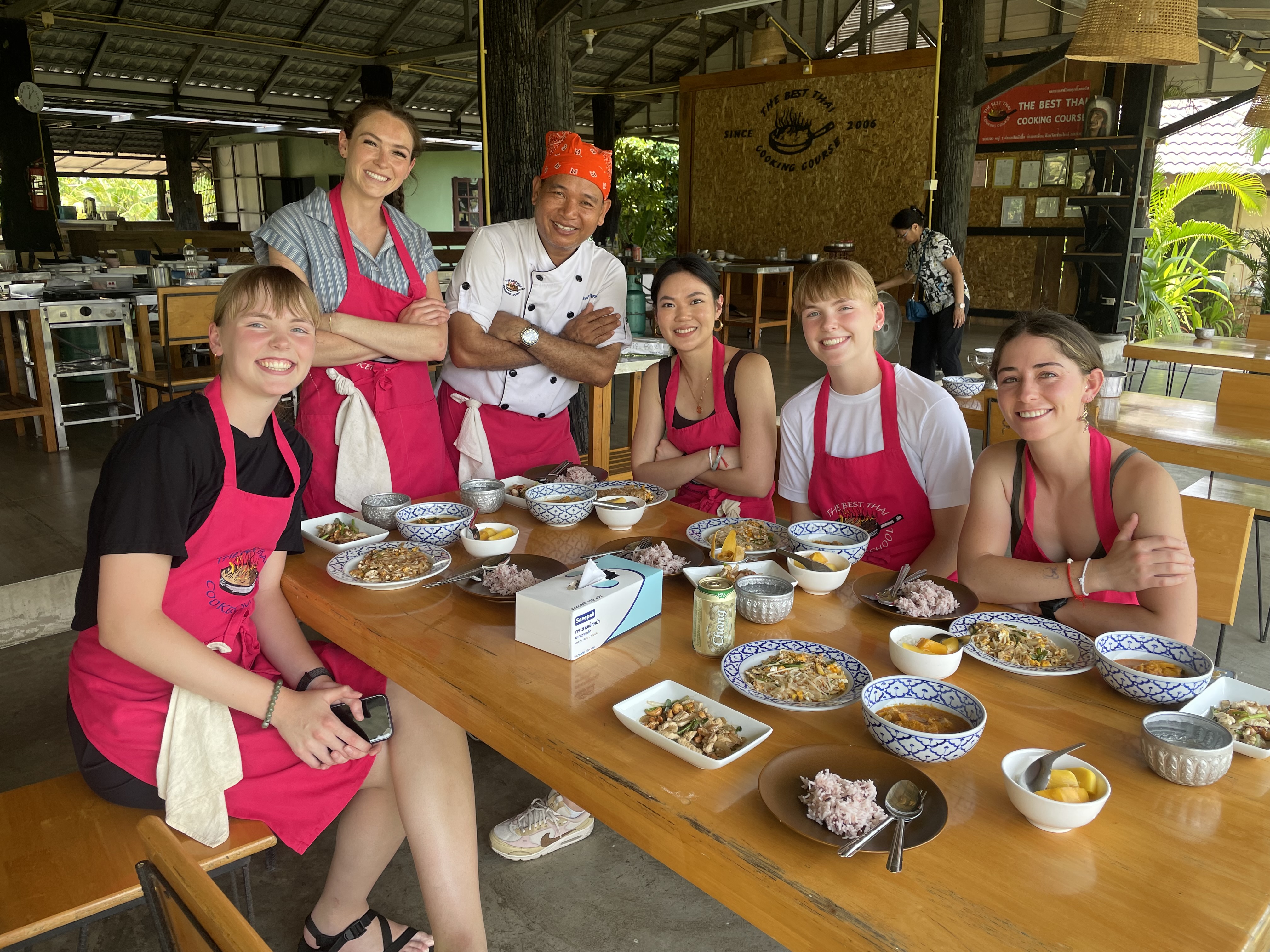
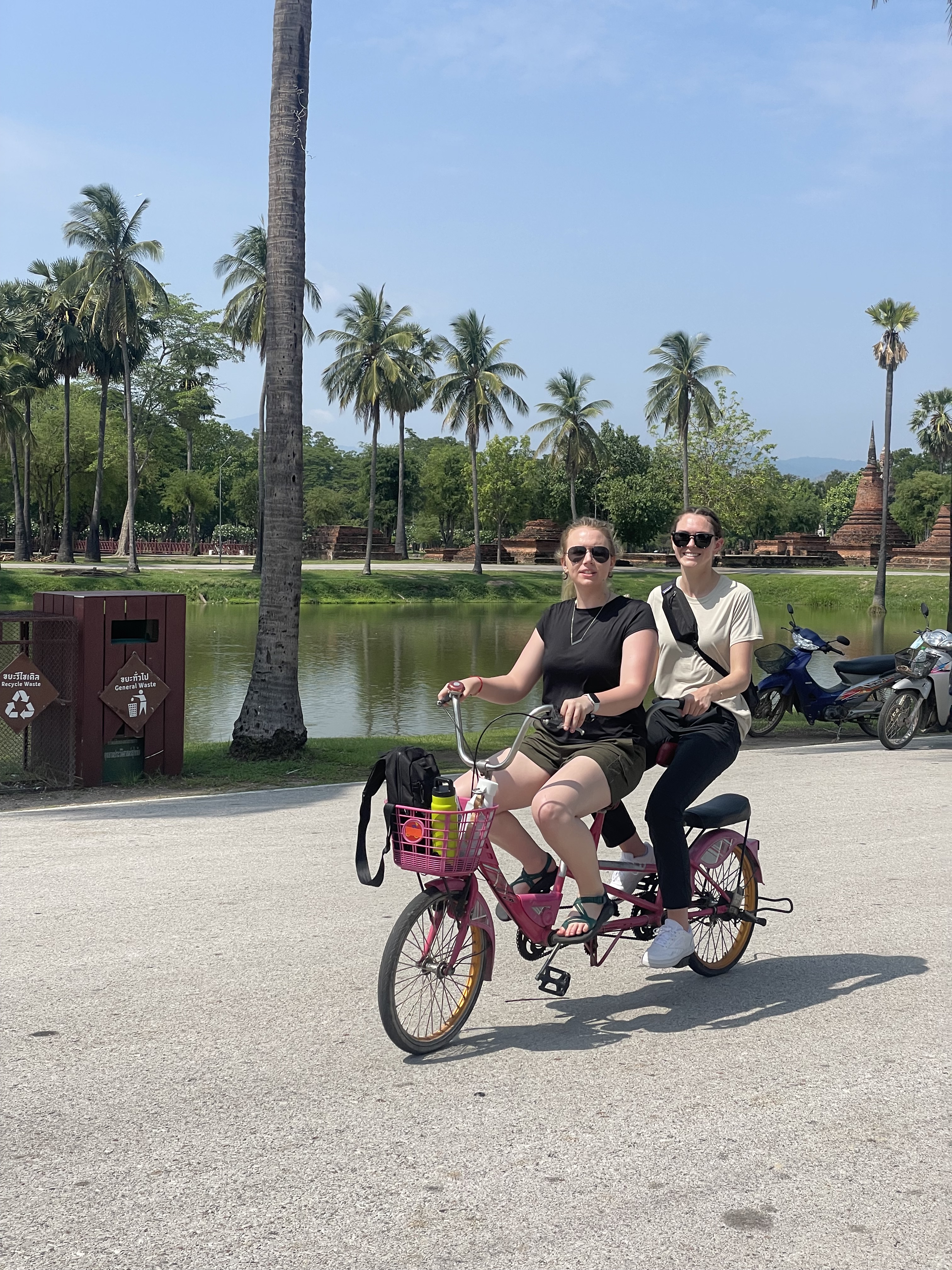
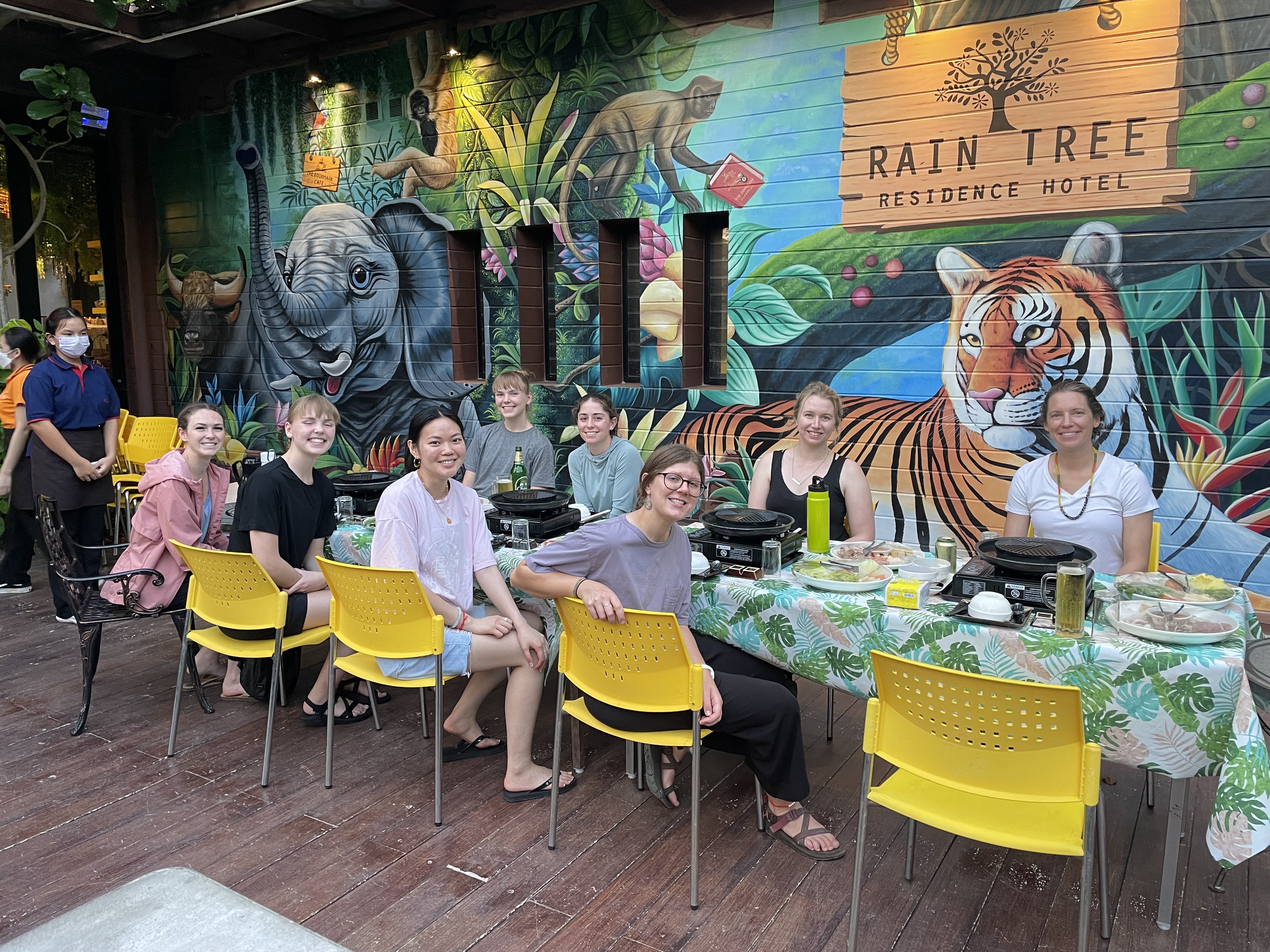
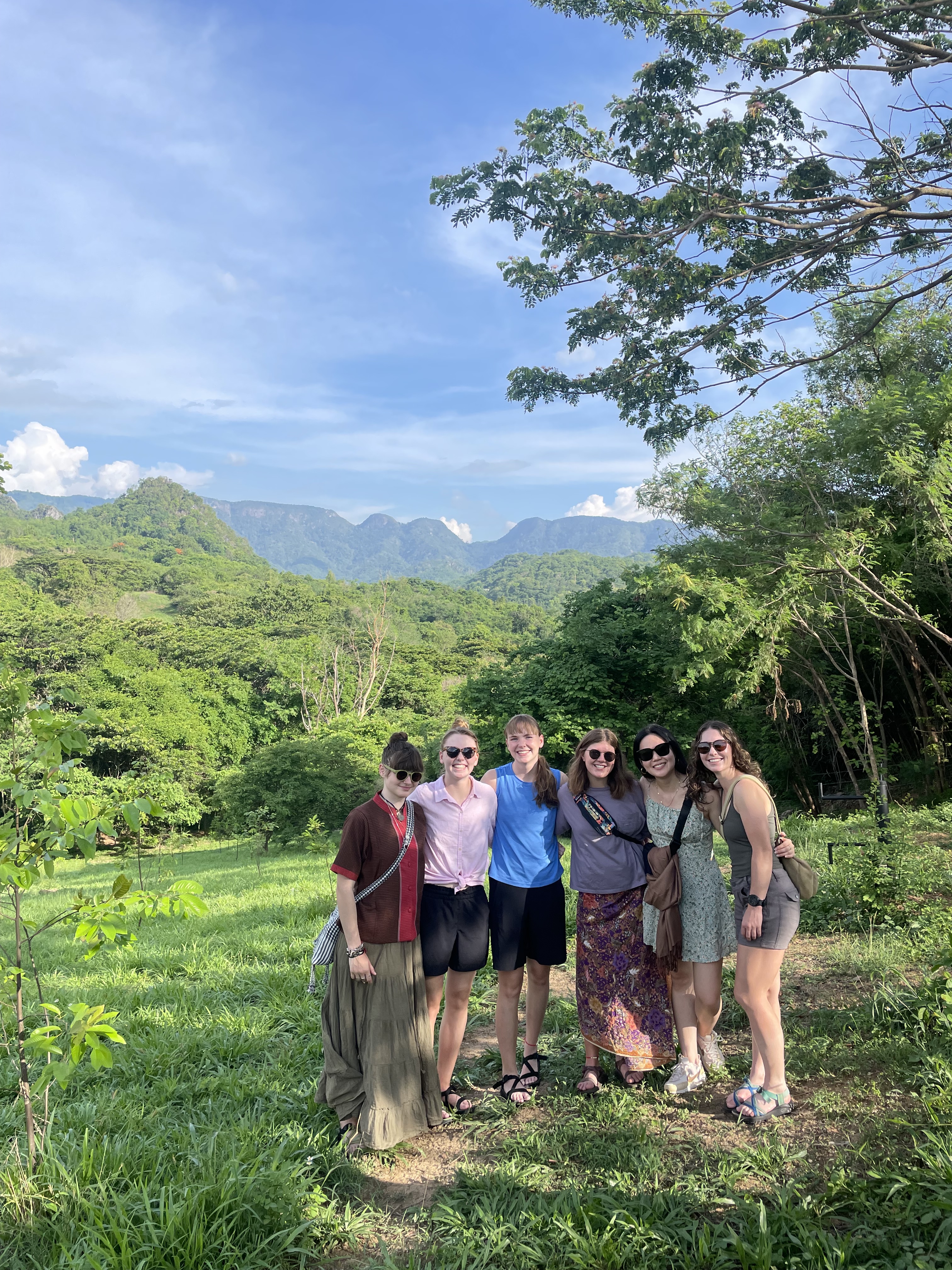
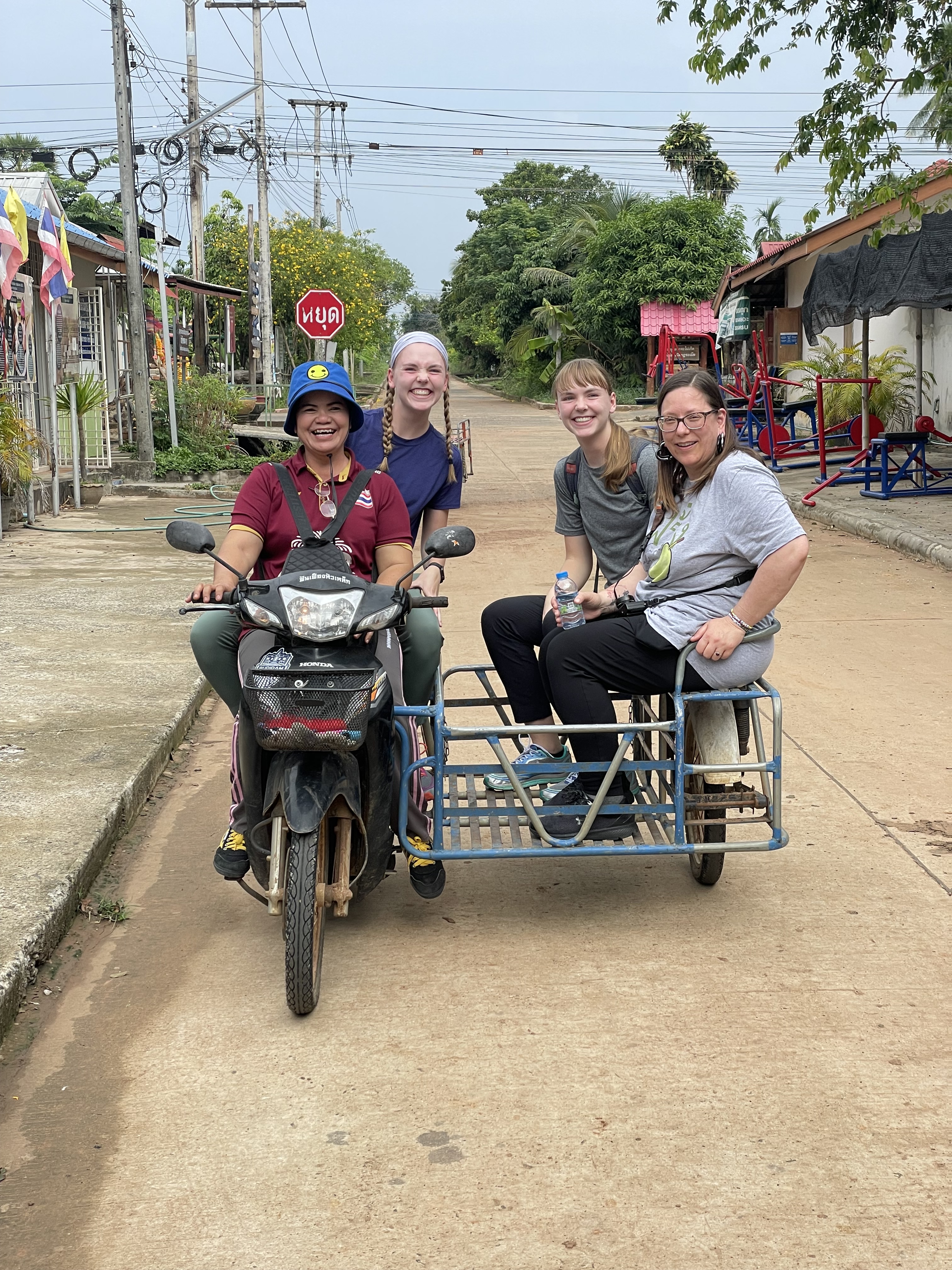
The clothing that we suggest depends on the setting. We essentially have several: visits to clinics, villages (service), temples and other holy sites, more “formal” occasions, and being a tourist. I’ve also included photos depicting the appropriate clothing that students in the past have worn in these settings.
Villages:
This is in the rural Northwest part of Thailand in the mountains bordering Myanmar, and being a rural area, it is more socially conservative. We will be participating in several school/village activities, as well as some service work at a K-8 school. We will also be visiting several other schools and possible other villages. When visiting rural villages, where the village elders may come to pay their respects, it always pays to be a bit more modest in dress. Not formal by any means, but not typical tourist, either.
When we’re just hanging out, we’ll want to be comfortable but still modest. Shorts are acceptable here, as are t shirts. Again, avoid tank tops or anything too revealing. You can bring athletic clothing, as there are opportunities to go running if you wish. We may also do some light hiking.
We will be staying at a school. This is an elementary/middle school, so be aware and respectful. We will also potentially be visiting homes in the village. If you wear shorts, make sure they are longer, and wear shirts or blouses that are more presentable. Polo shirts, nicer t-shirts, button down short sleeve shirts or blouses, these are all appropriate for schools and doing home visits.
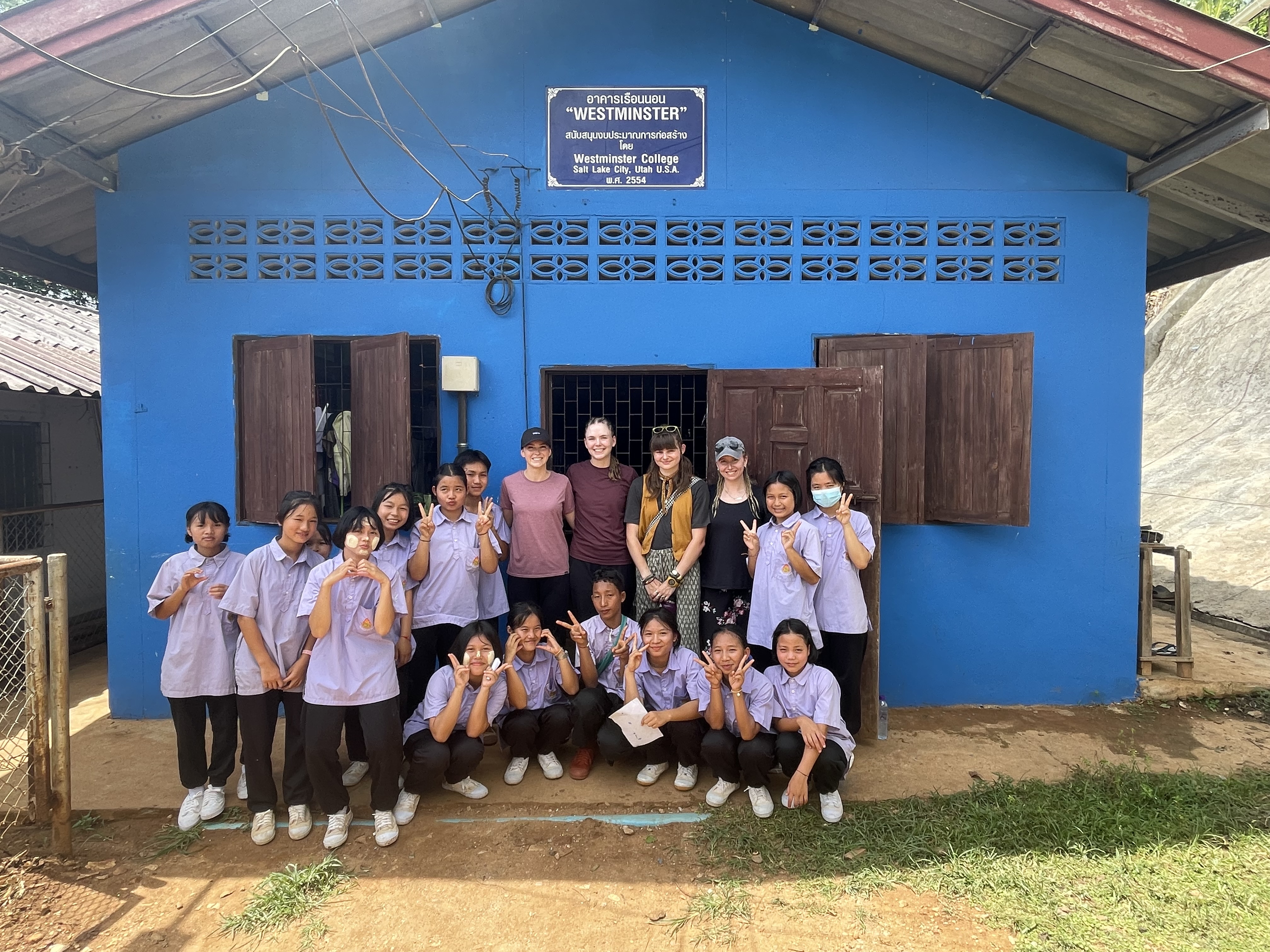


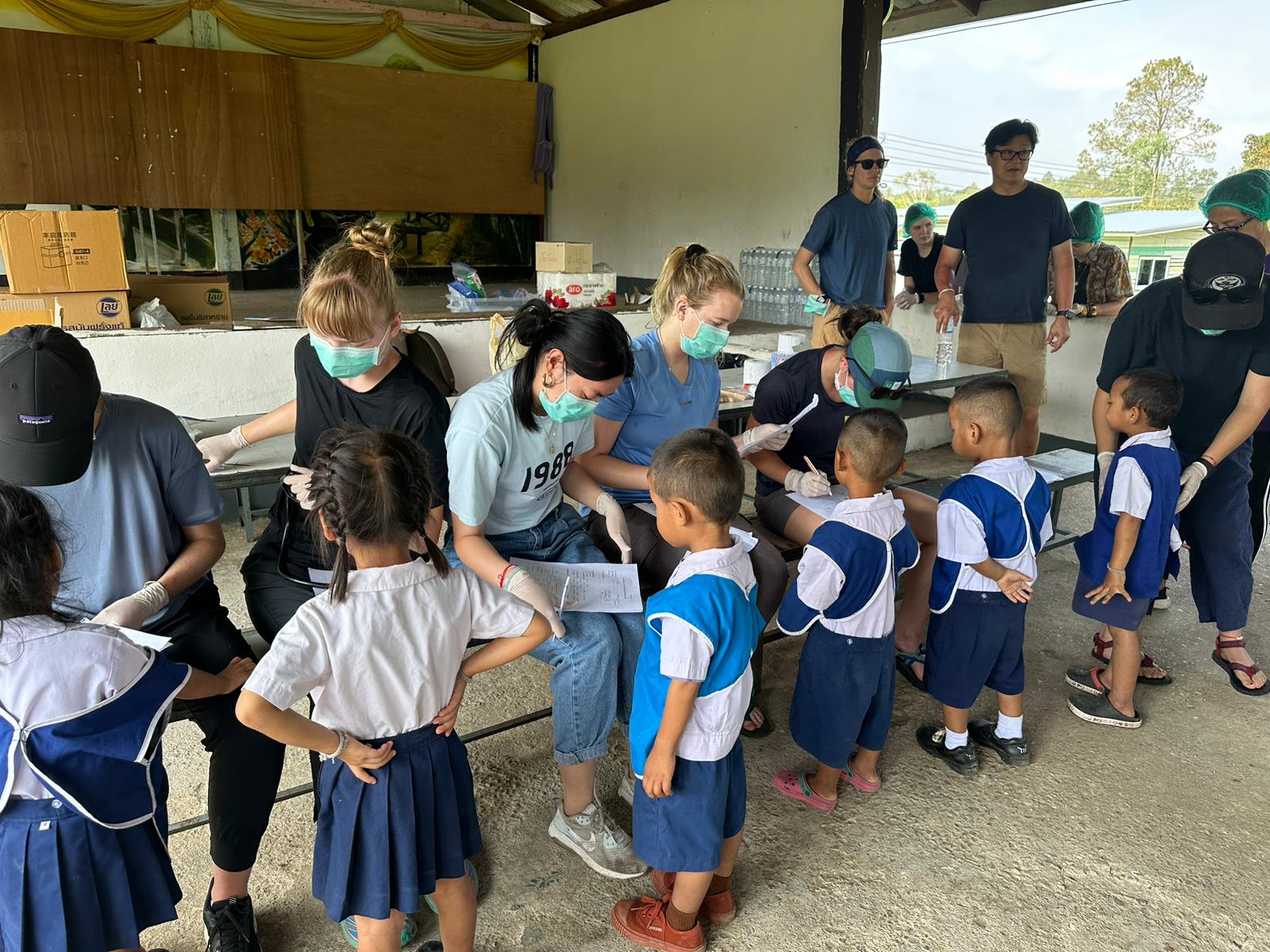

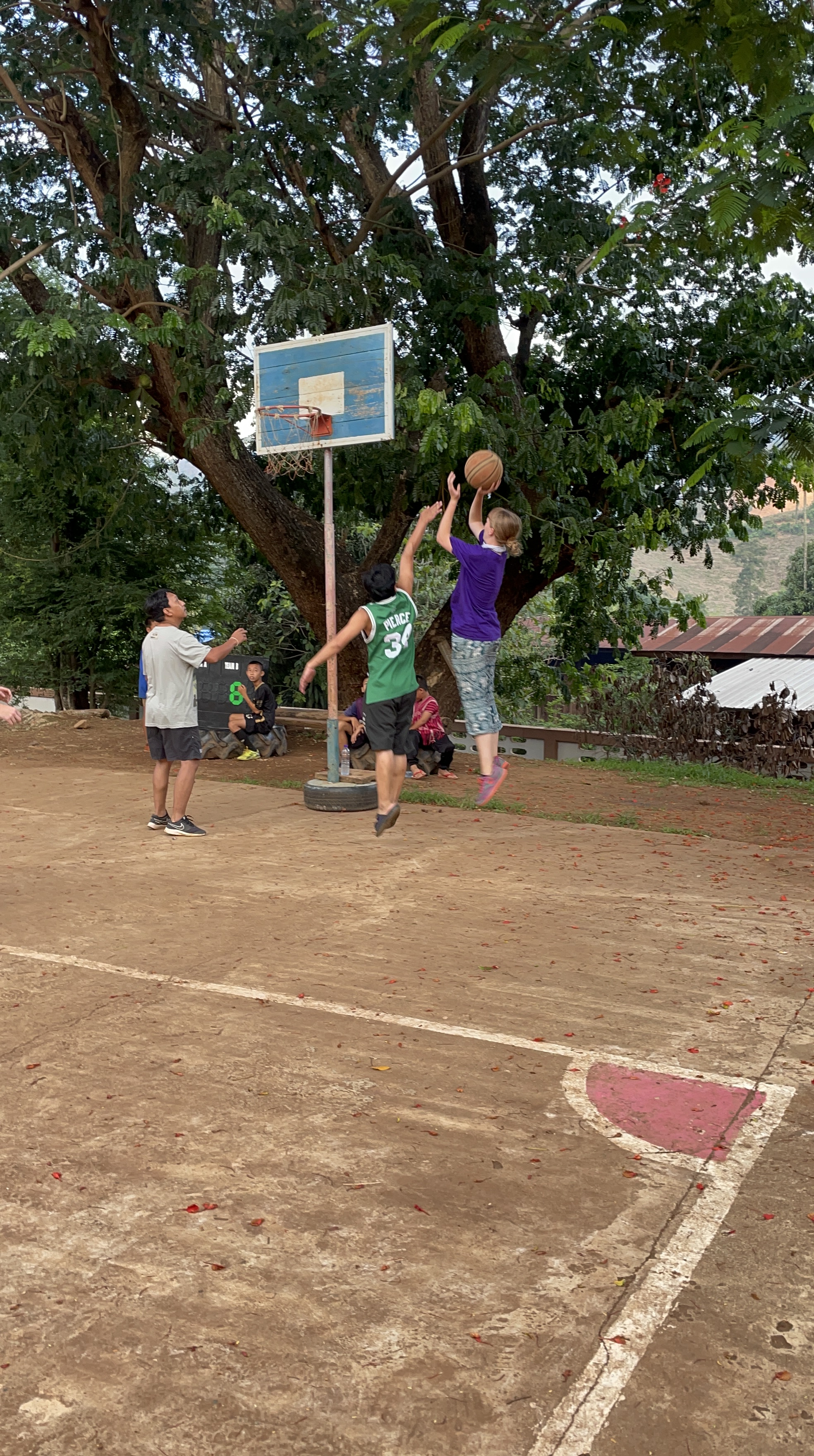
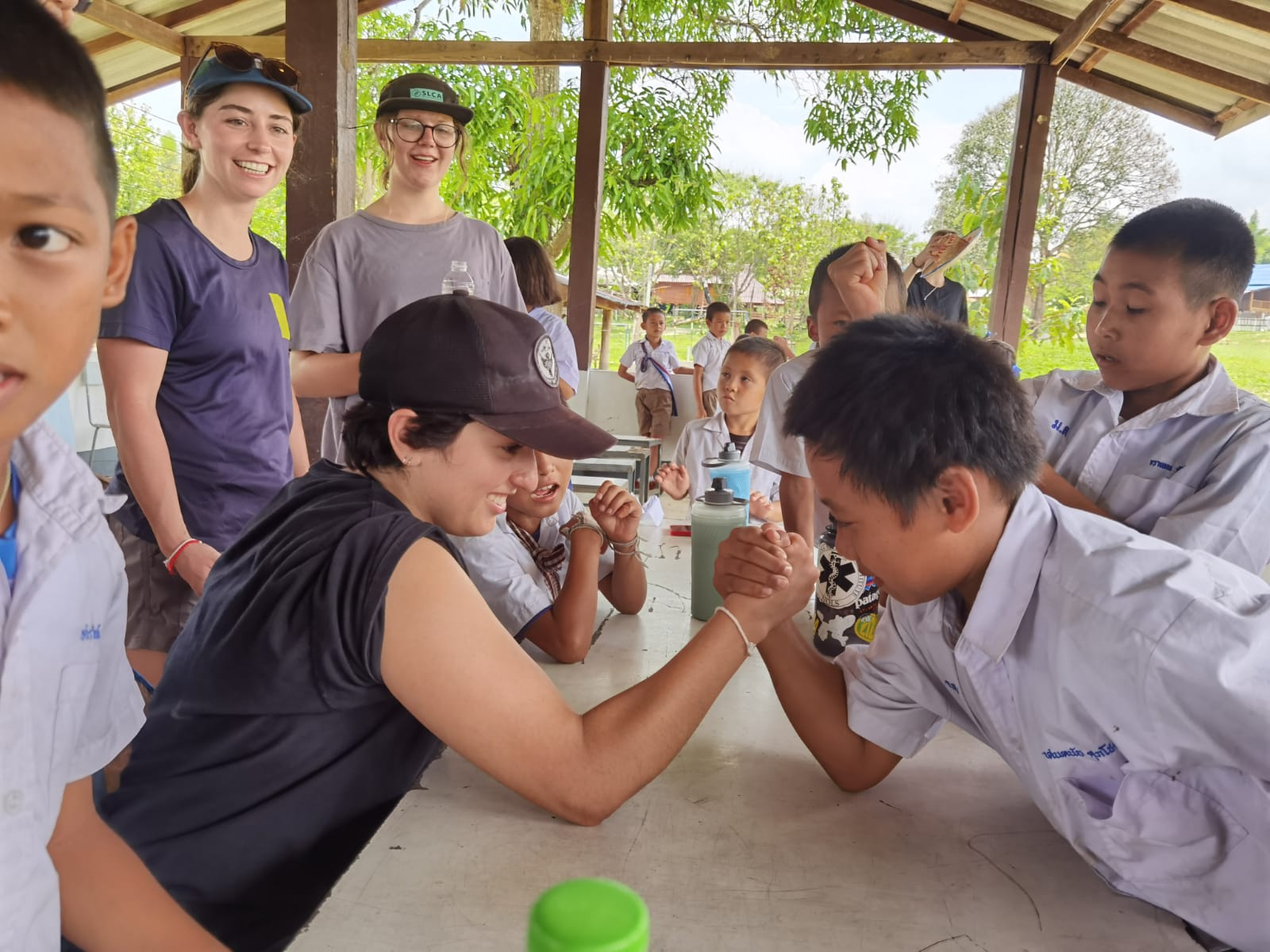

One other note: there may be some minor service work done. Make sure you bring some clothes that you don’t mind getting ruined.
The weather here will be VERY hot and humid, you won’t really need layers in these villages, unless you get chilled by the occasional visits to air conditioned rooms. It may also rain as well. You can bring a very lightweight raincoat, or just buy a cheap plastic poncho in Thailand.
Temples and Other Holy Sites:
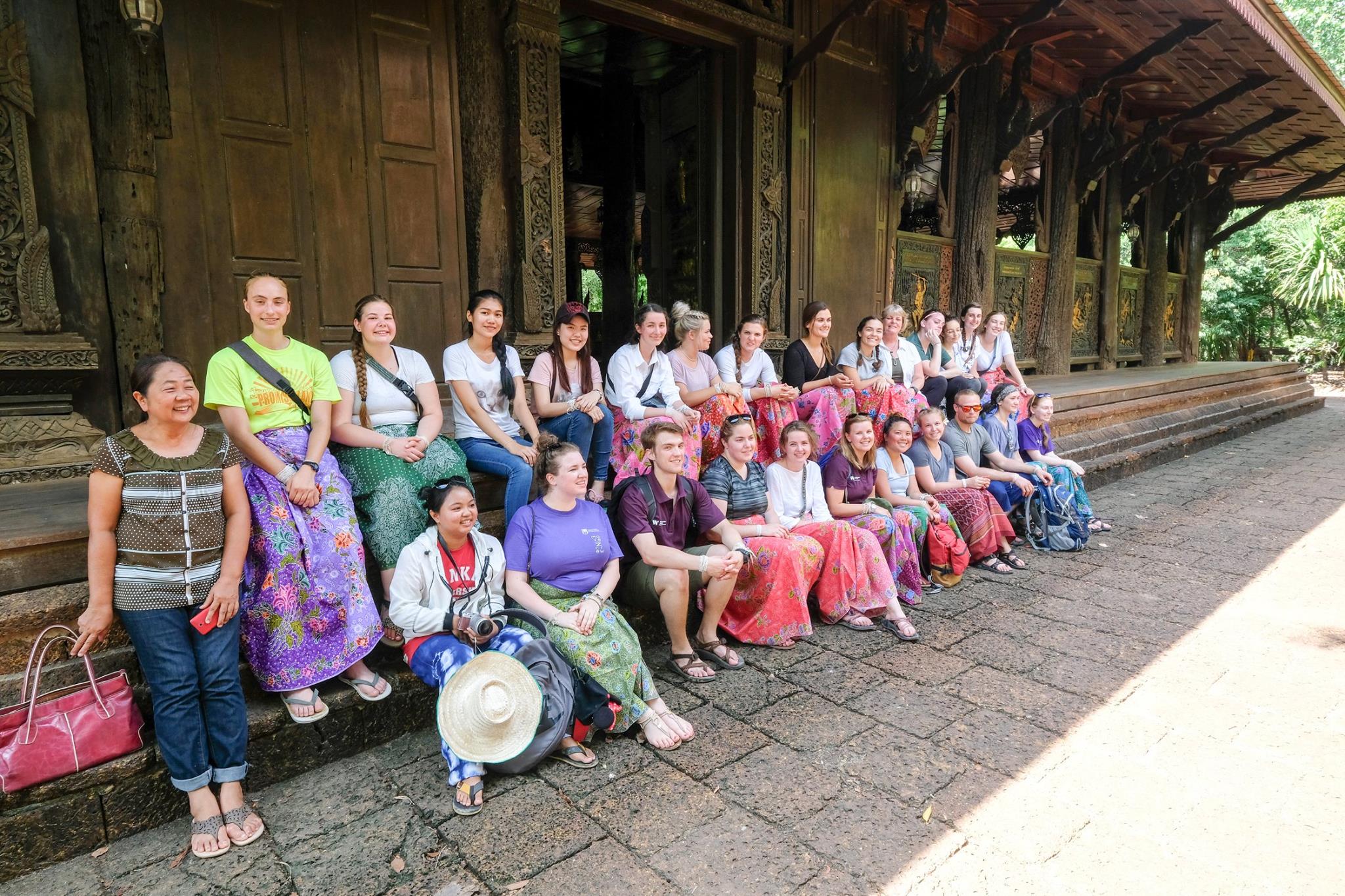
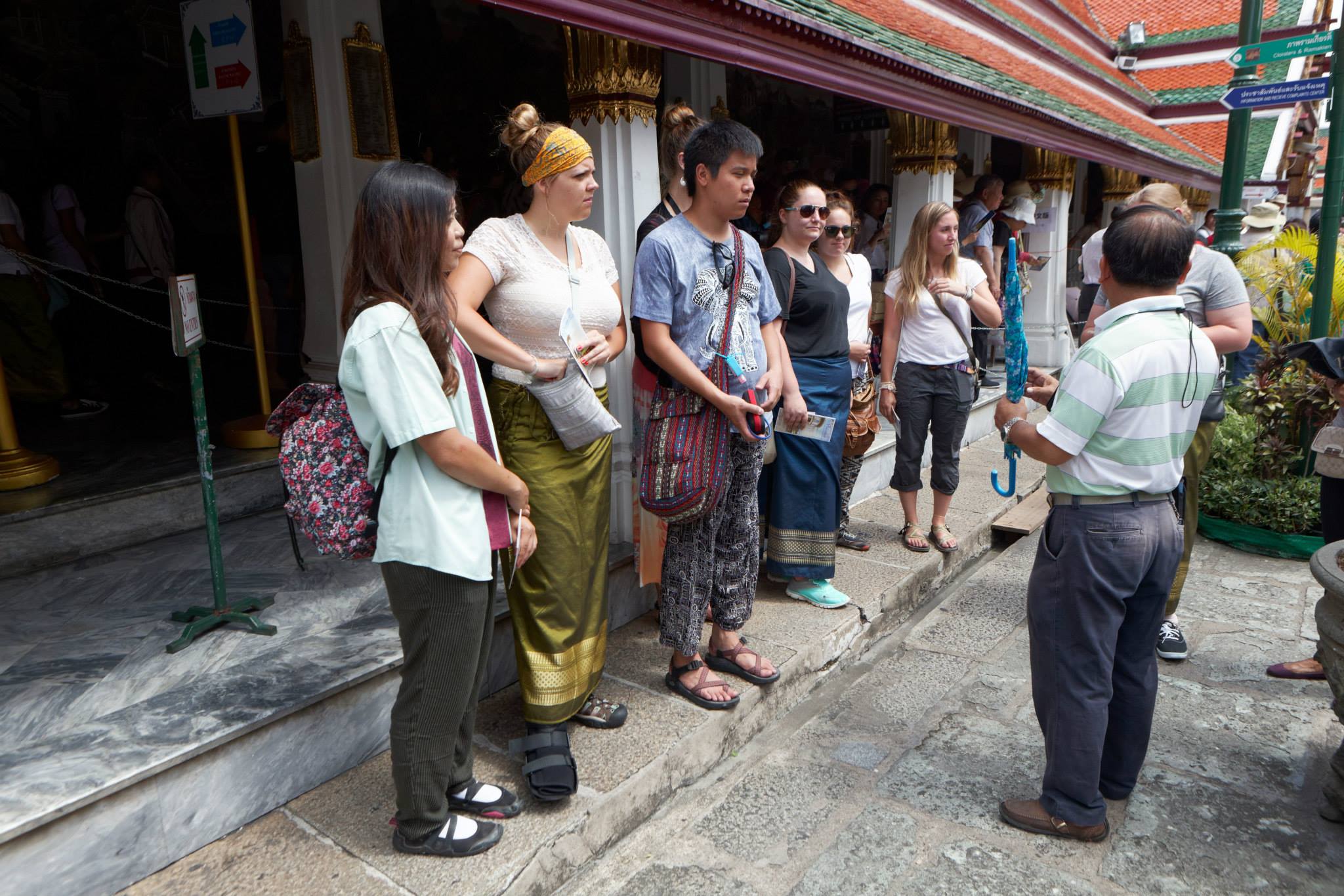
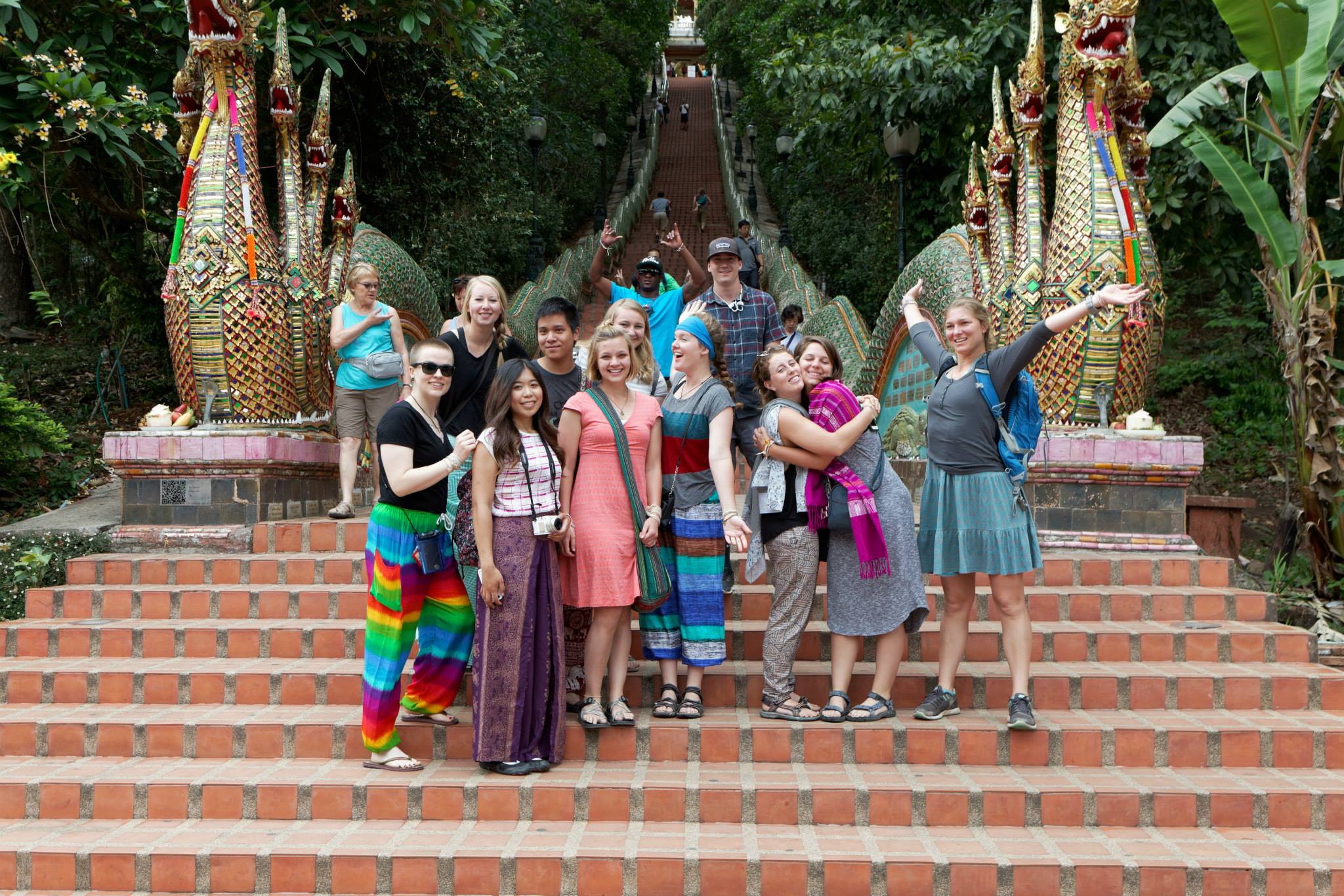
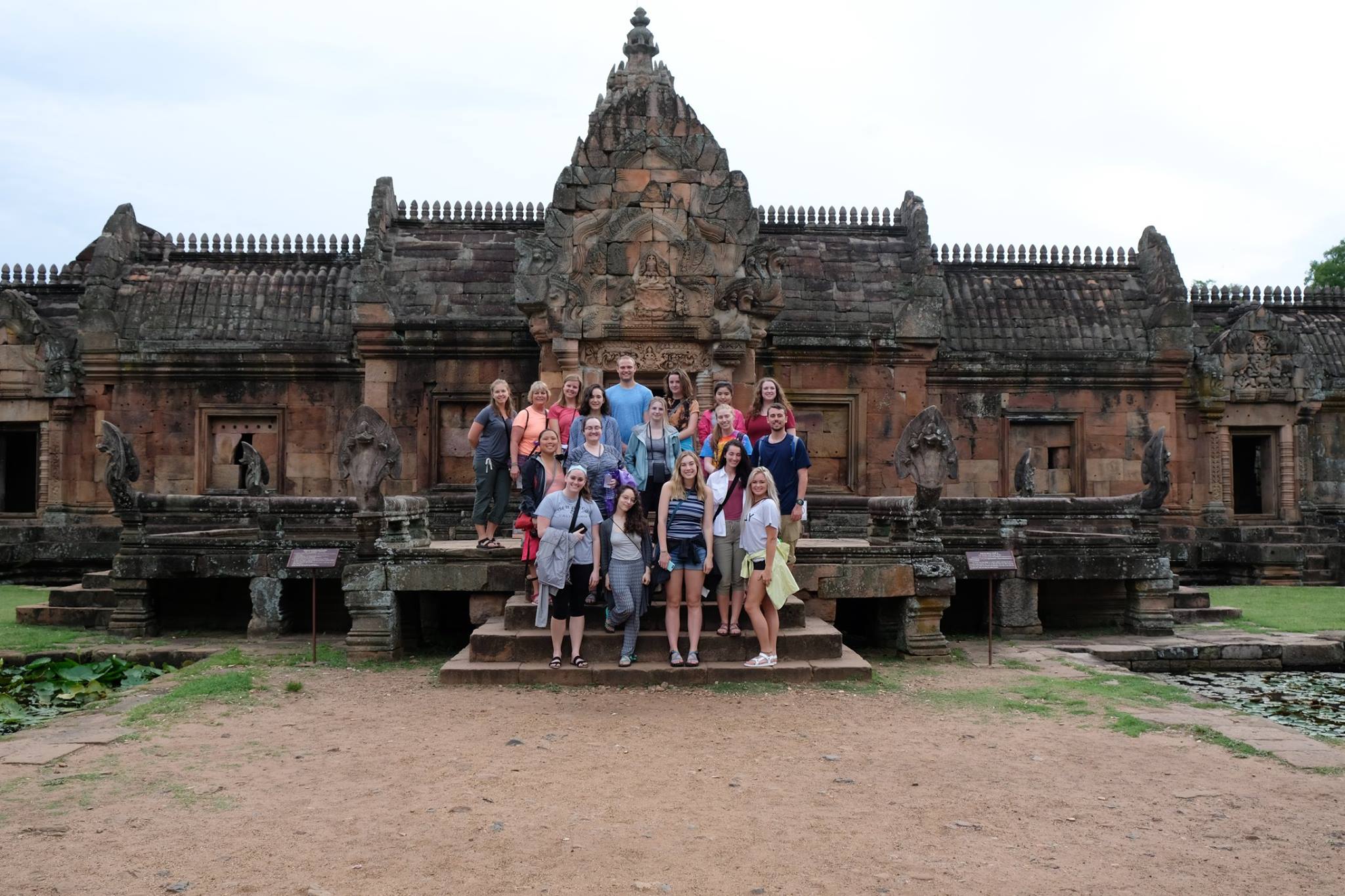
These are places that are holy to most Thais, and therefore you MUST dress appropriately. You need to dress conservatively, which means long pants for men, and long pants or dresses (to ankles) and covered shoulders for women. A good idea for women is to bring the sarong (a wraparound long skirt) that we will be providing you and carry it with you, so you can use it as a shawl or a skirt. Plus, a Thai silk sarong is something you’ll probably want to buy anyways. Please refer to the picture below. Notice they are wearing shirts with sleeves, not too revealing, and either longer capri pants or a sarong. In fact, those sarongs were rented at the temple because their pants were too short.



More “Formal” Occasions:
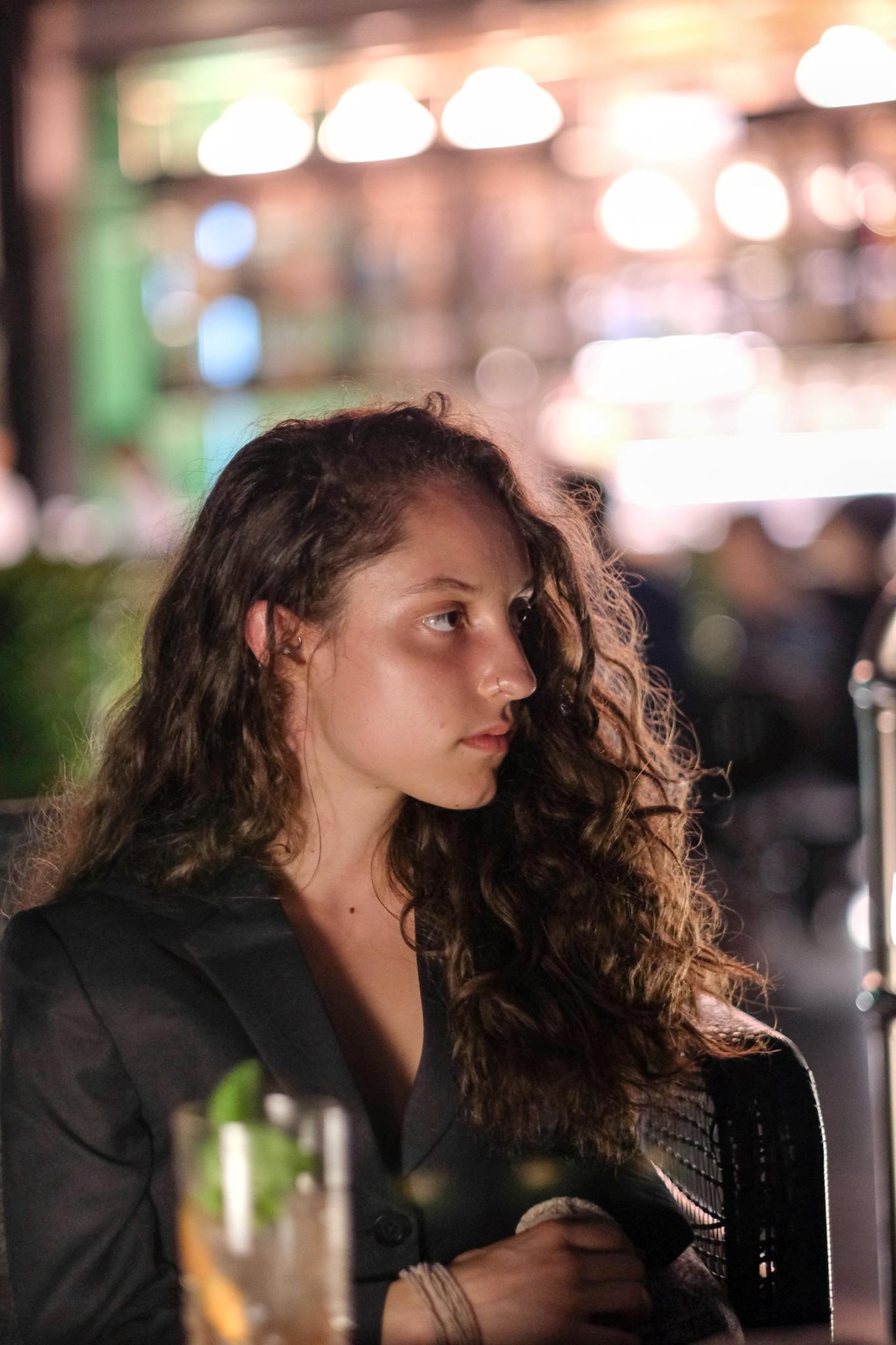
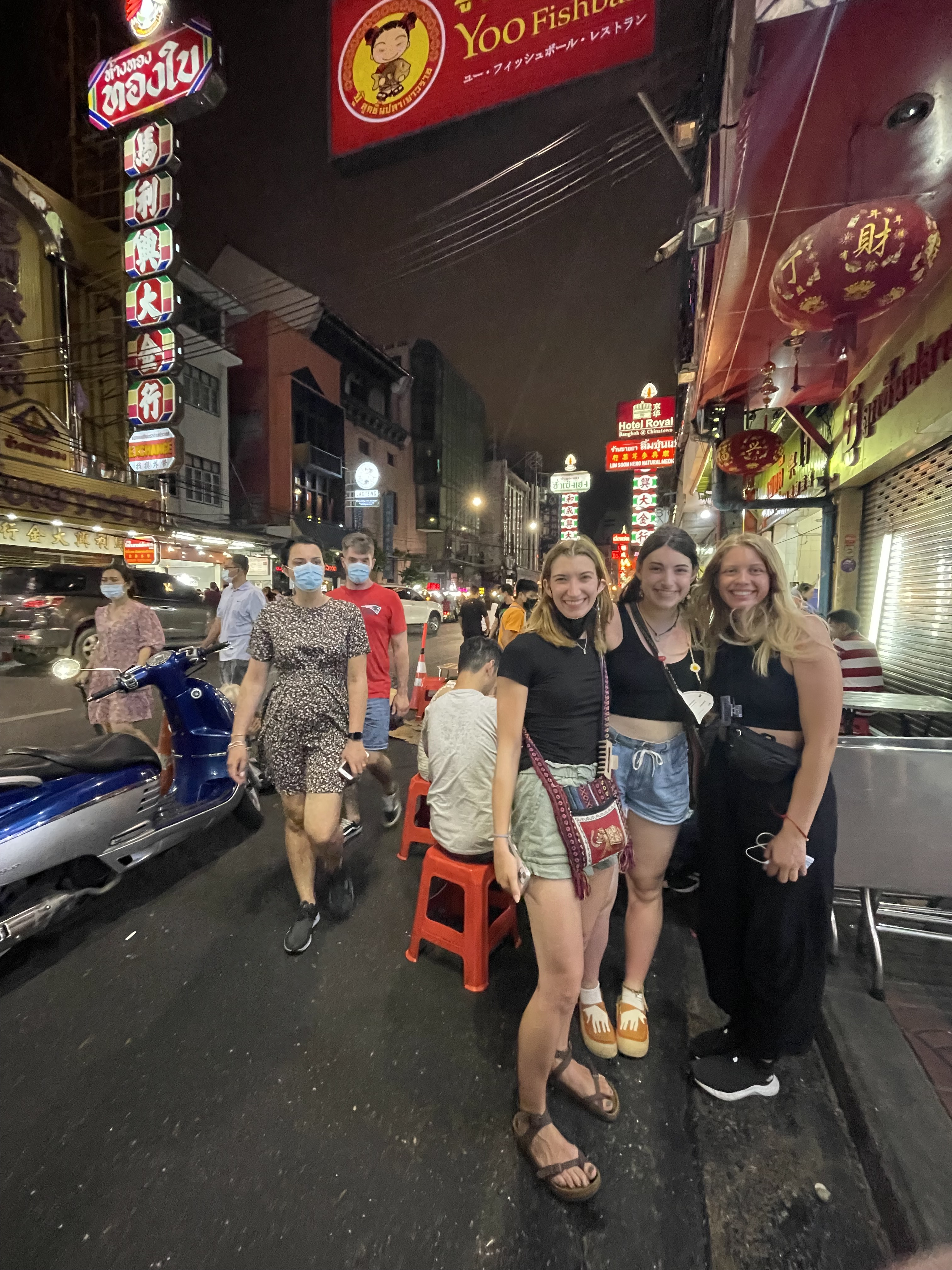
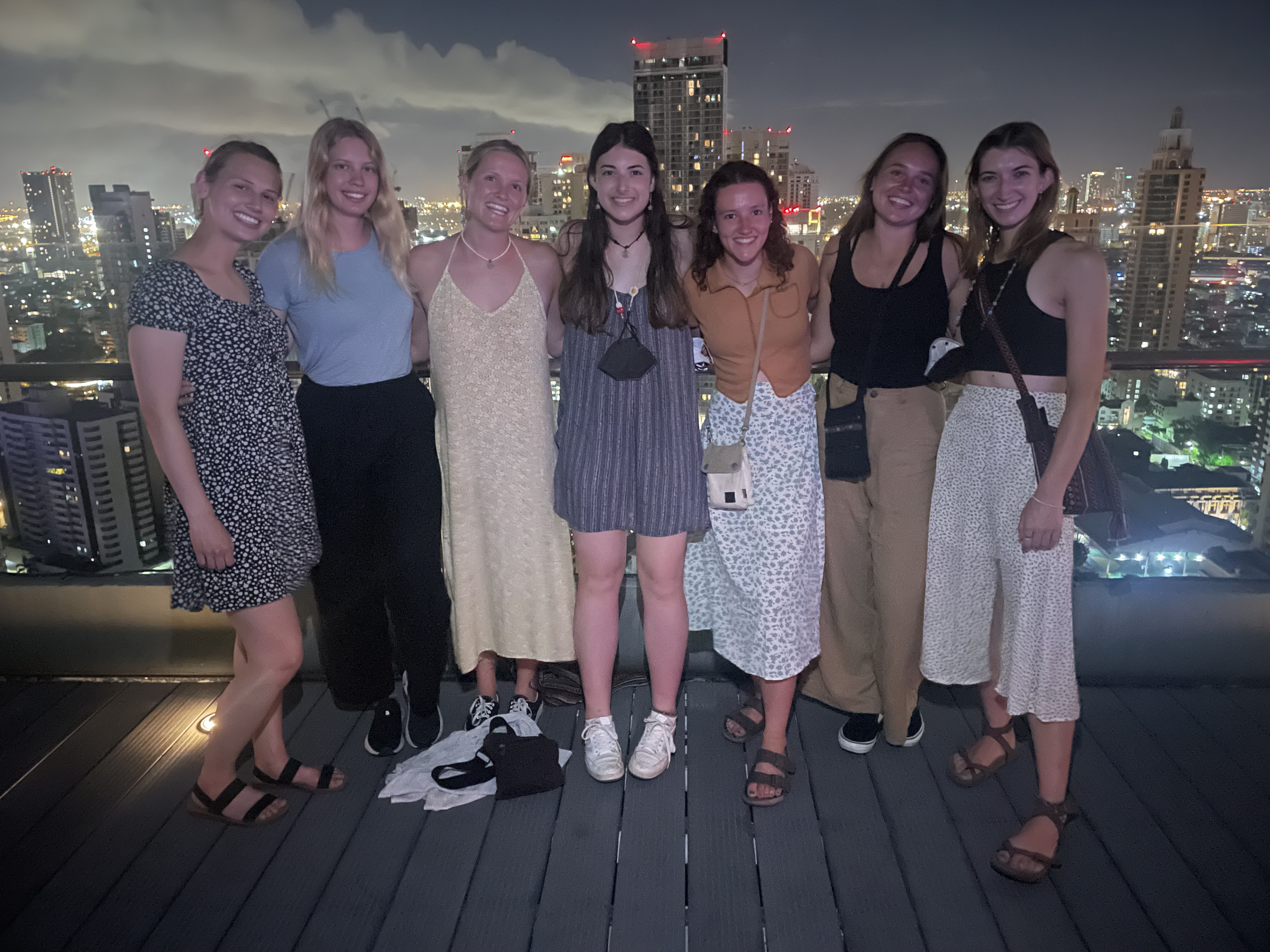
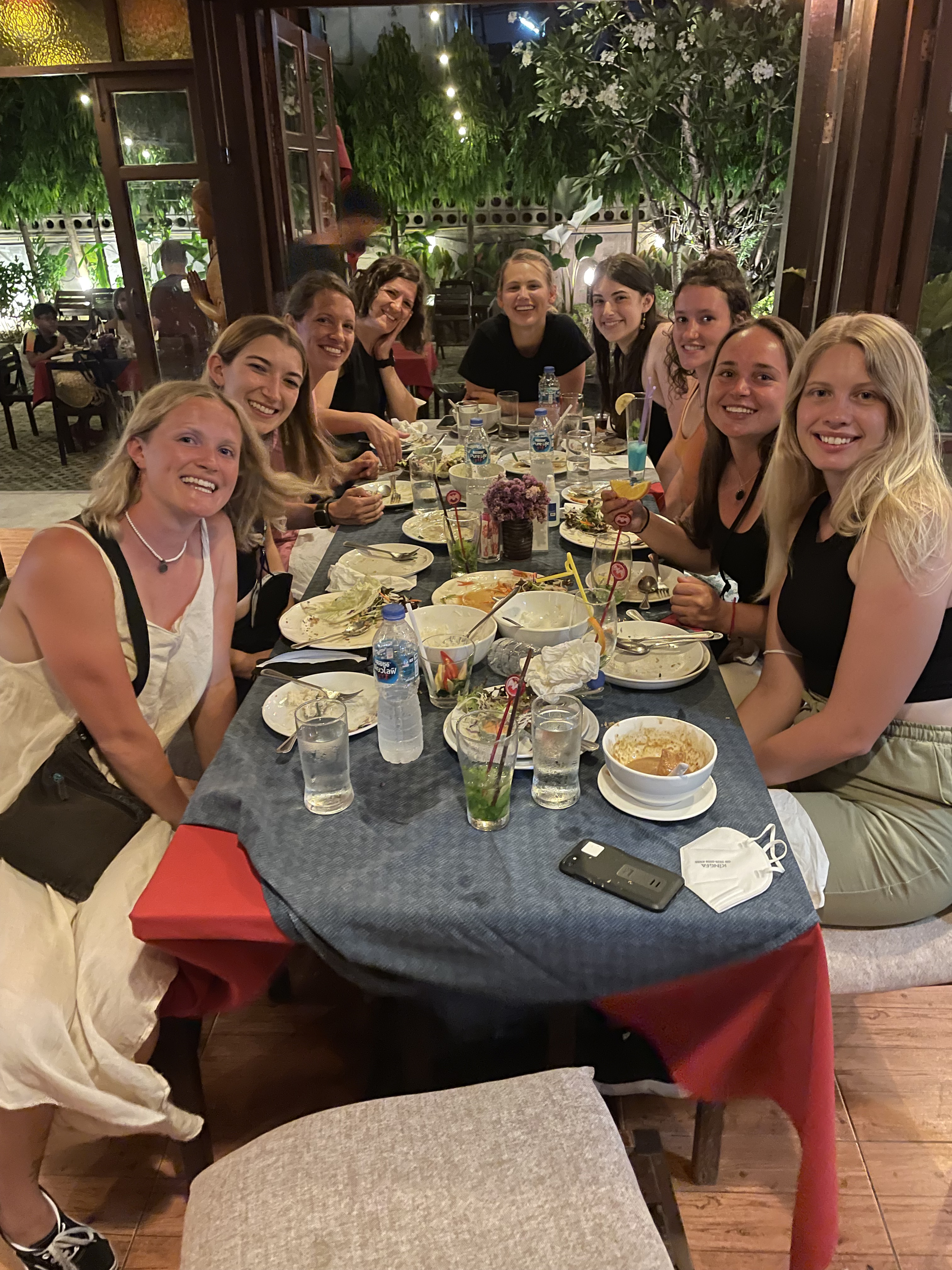
There may be a few opportunities to go out to a nice restaurant in Bangkok or a club in Chiang Mai. For these occasions, a nicer outfit would be appropriate to have. We’re not talking about cocktail dresses, suits, heels, and dress shoes. We’re talking about a nicer button down shirt, nicer slacks, and a nicer shoe for the men, and a nice summer dress and nice shoes (a sandal with a backstrap that isn’t Chacos or Tevas). It’s amazing how much you can dress up a button-down short sleeve shirt and slacks, or a standard black dress. Again, shoot for clothing that can be dressed down and casual, or dressed up and more formal with the proper combination or the addition of some accessories. You DON’T need to bring a specific outfit just for one or two nice dinners/events.
Here are some photos of what students have worn on past trips for more dressy evenings. CJ’s suit was actually purchased in Thailand. Lila’s suit jacket in the next photo was also purchased in Thailand. They are custom fitted suits, at a fraction of the cost you would pay in the US or Hong Kong. If you’re interested, we can take a side trip to a tailor.


Being a Tourist:
When we’re tourists, we can dress casually. I prefer to dress more “local”, but you can dress comfortably for the occasion and weather. However, when you’re being a tourist and visiting temples, make sure you dress appropriately! Keep in mind, the best way to not be a target for crime is to not stand out.

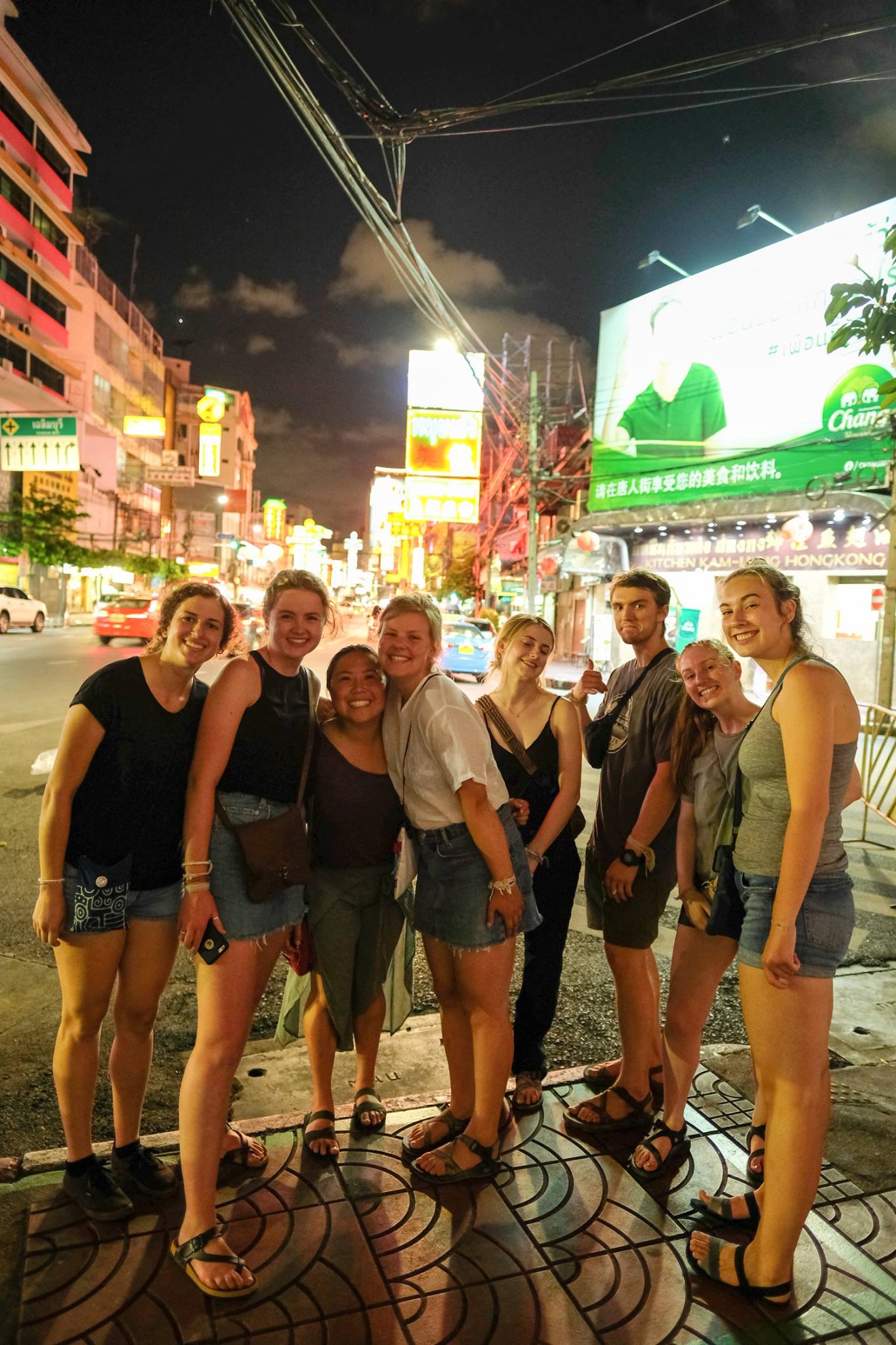
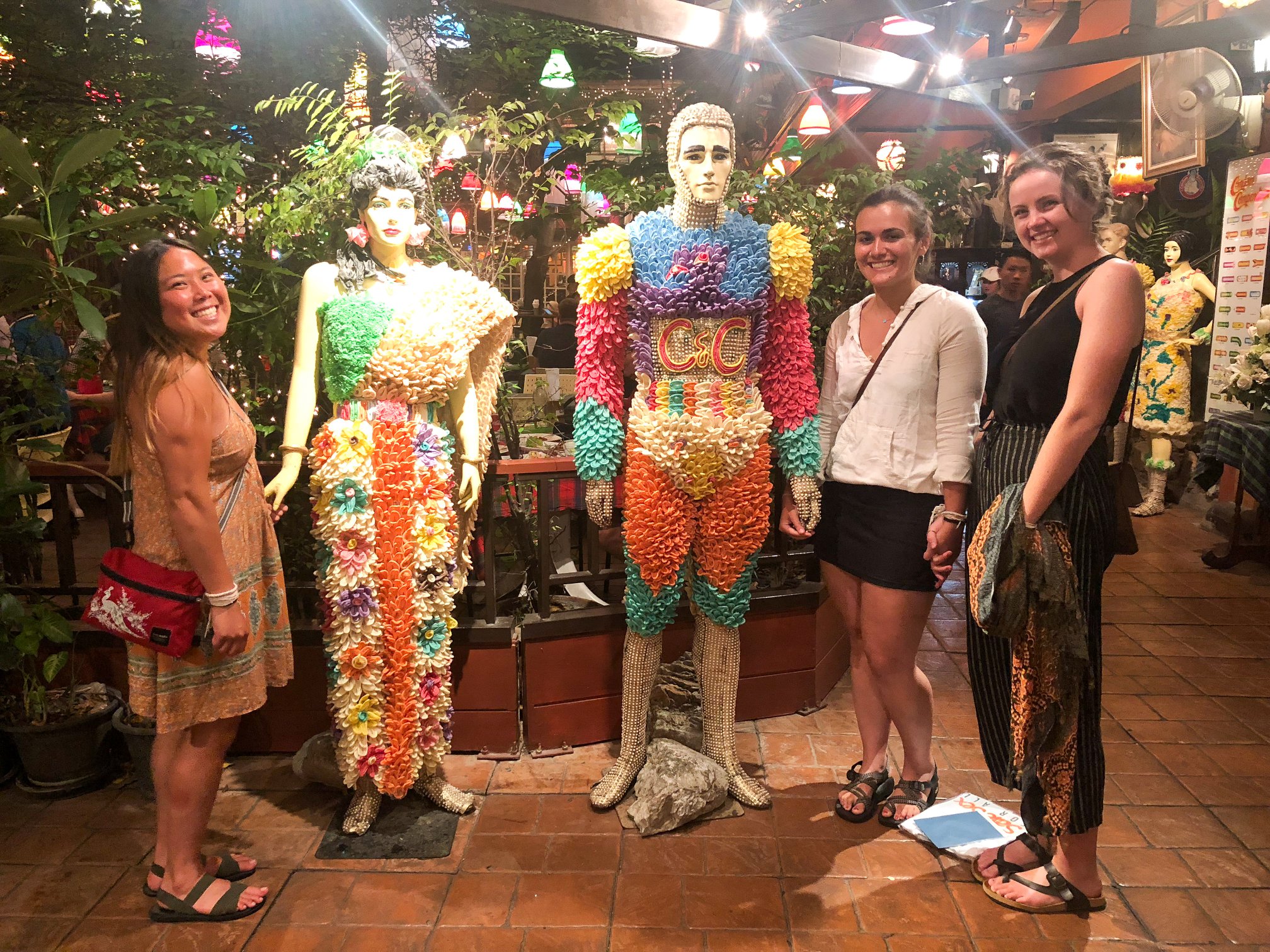
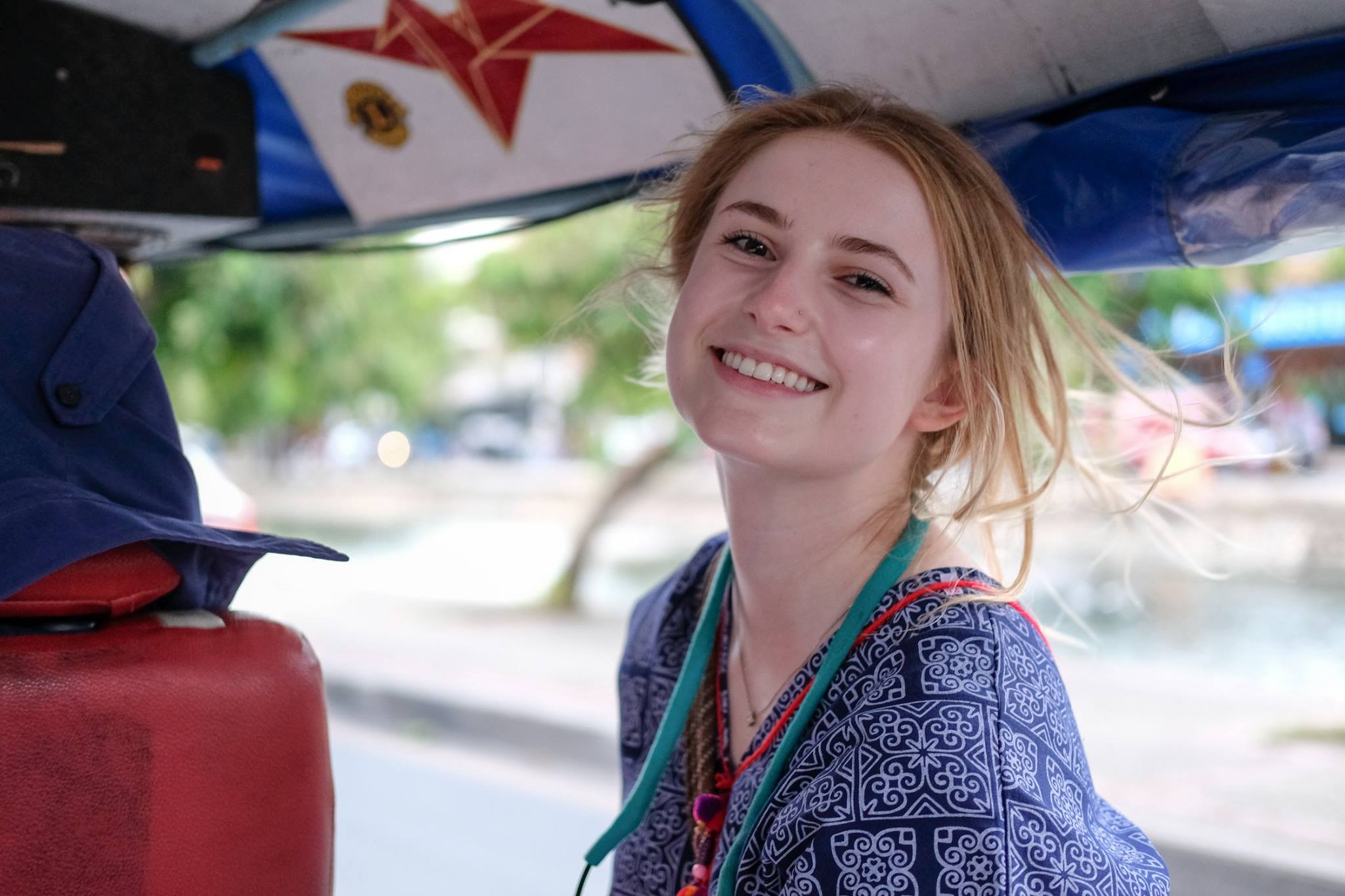
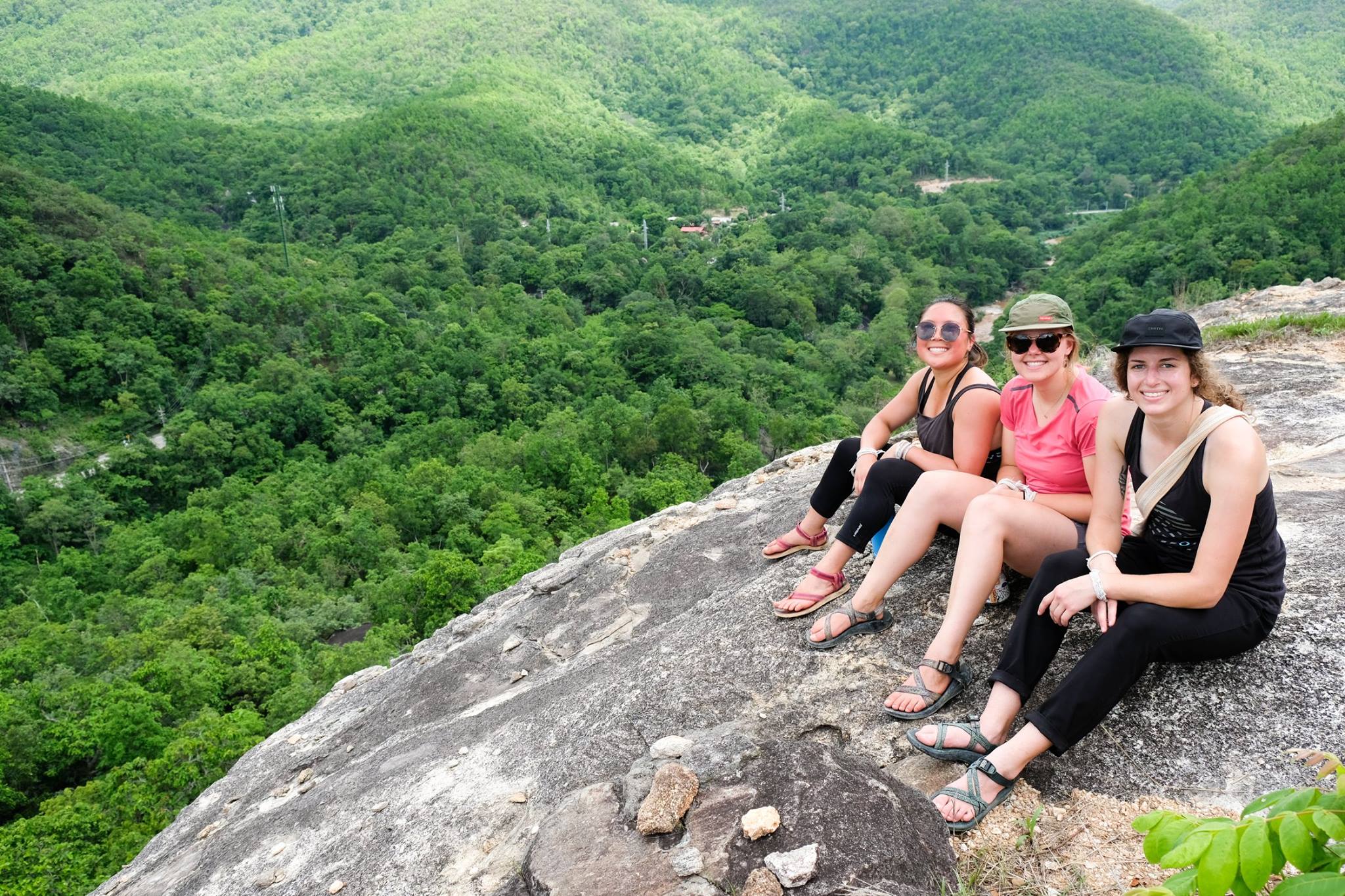

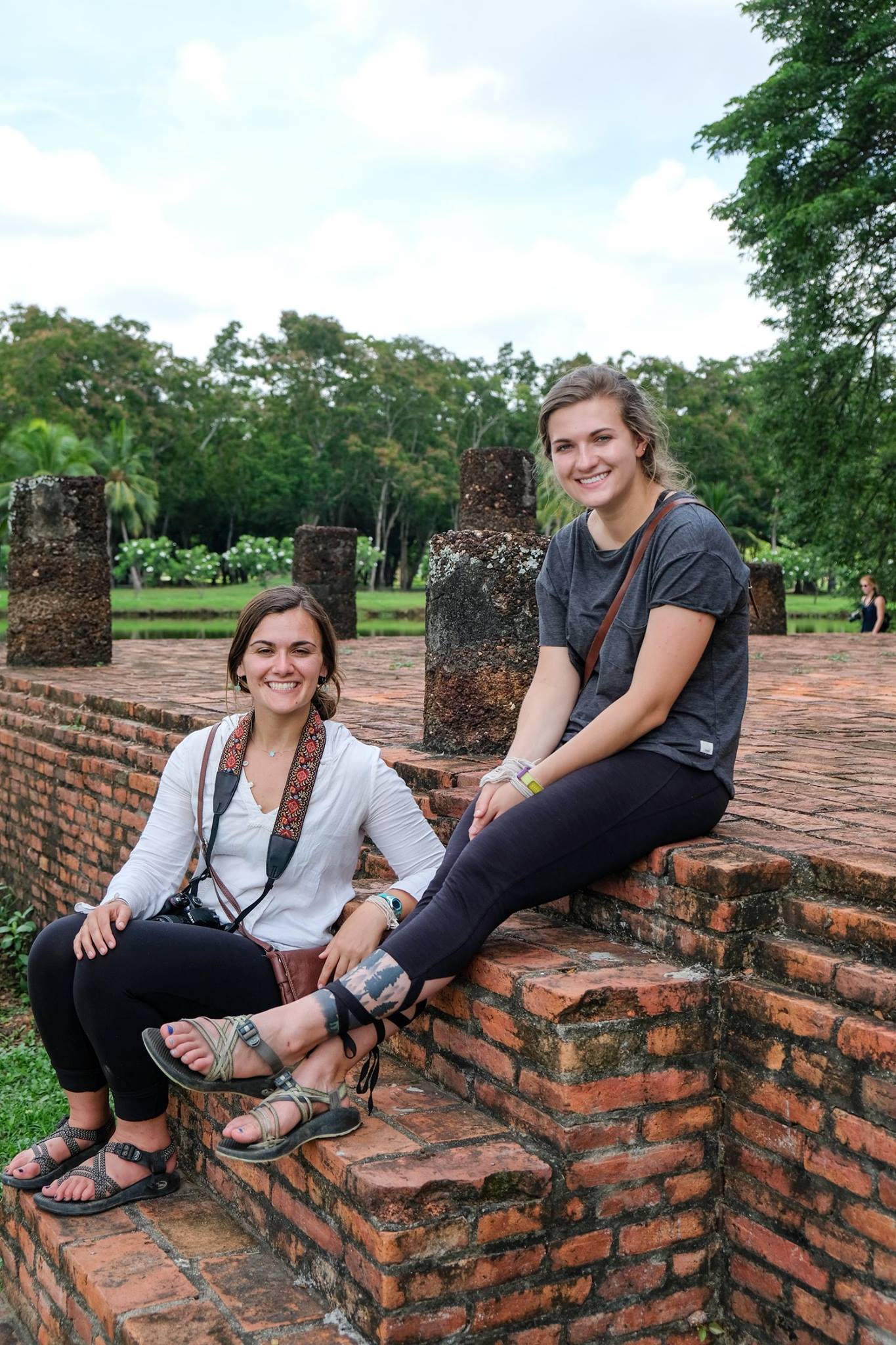
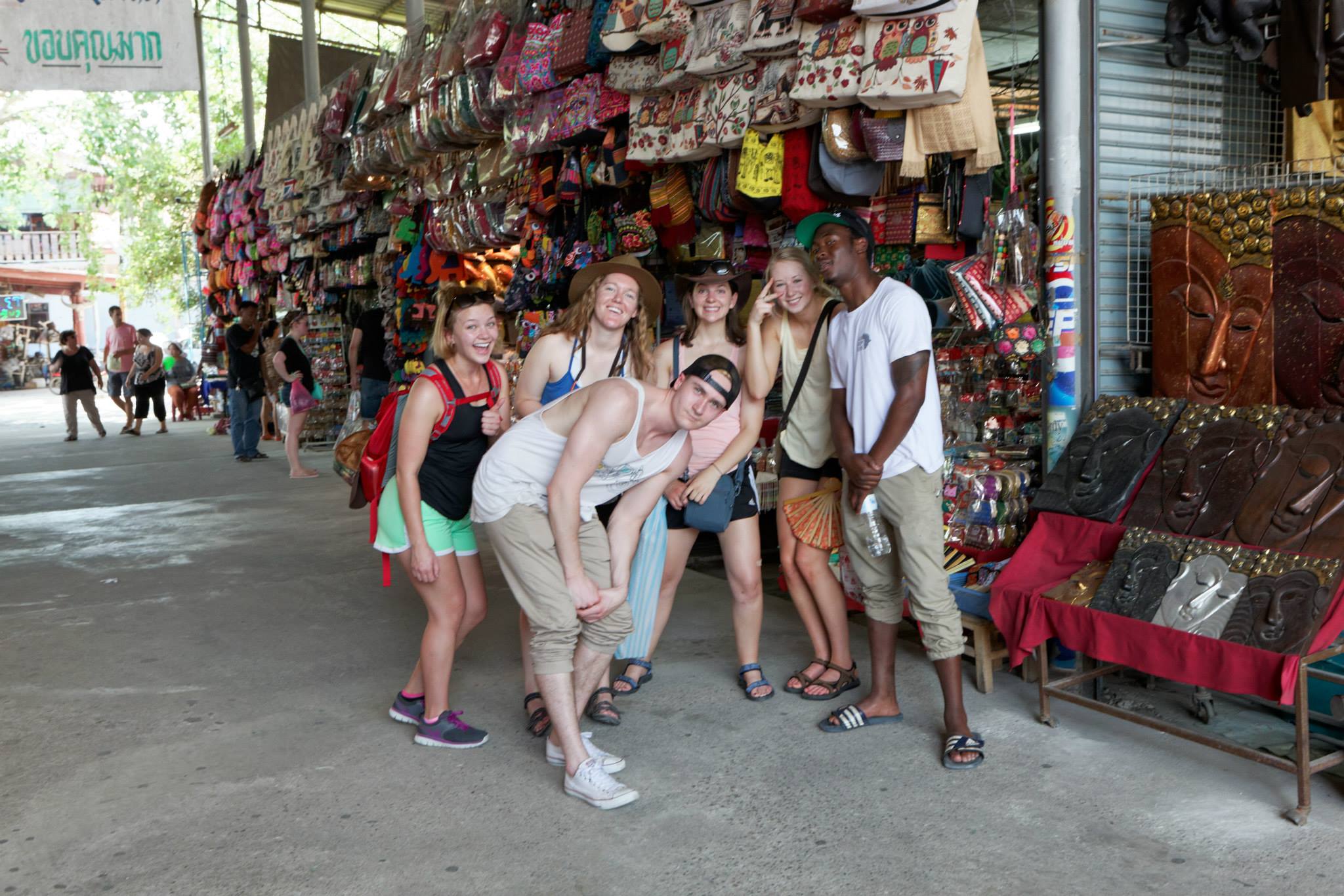

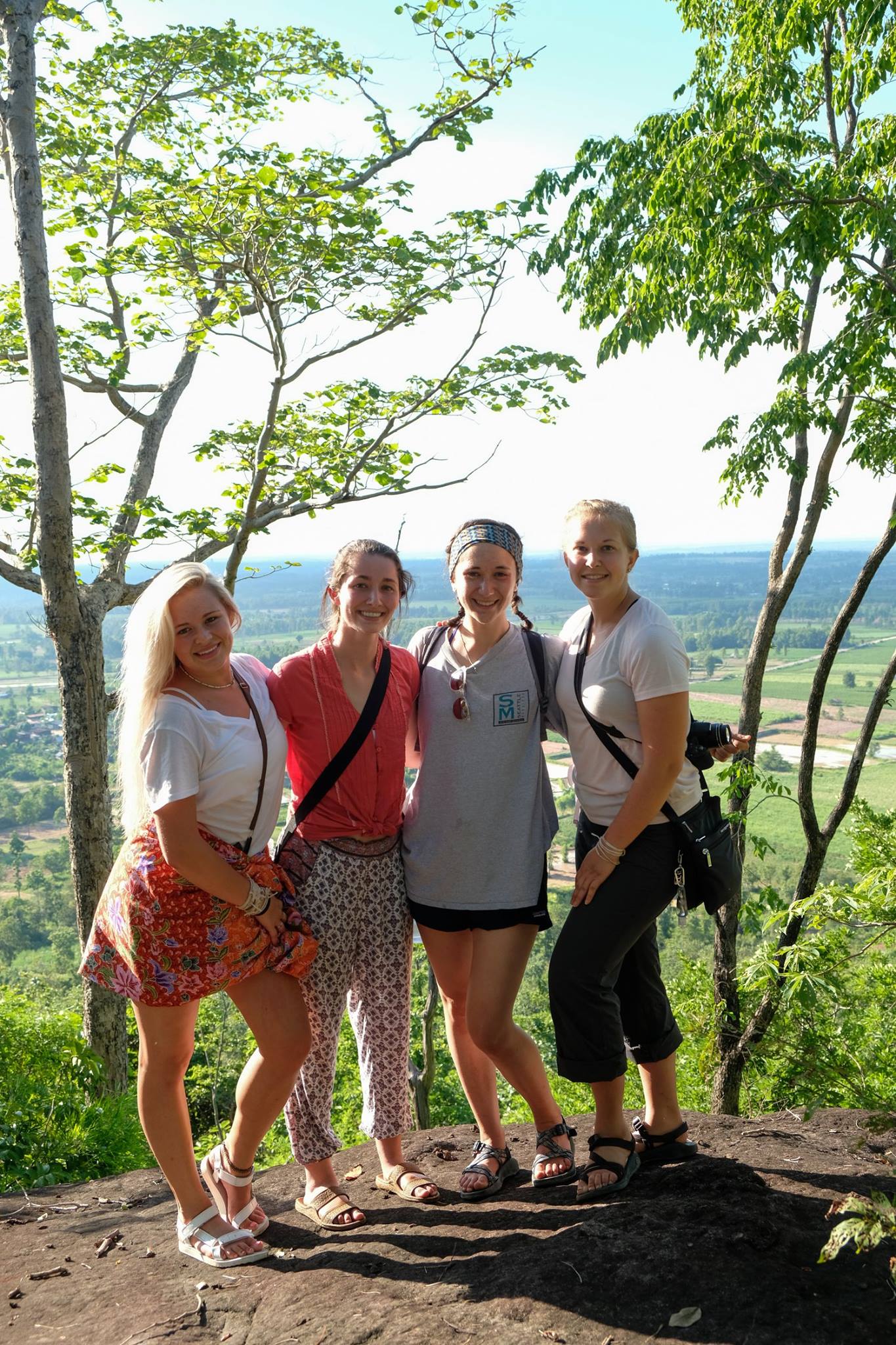

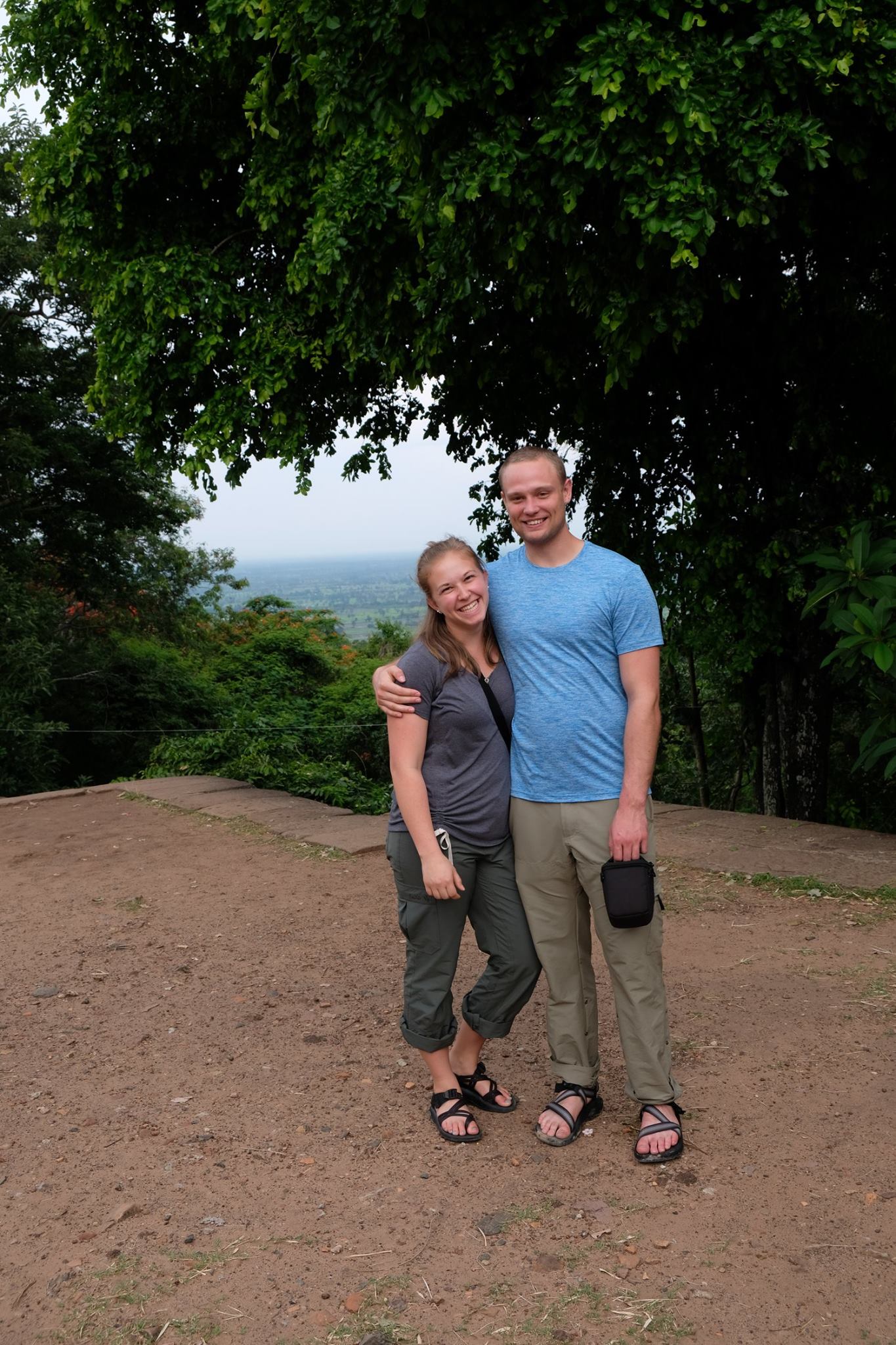
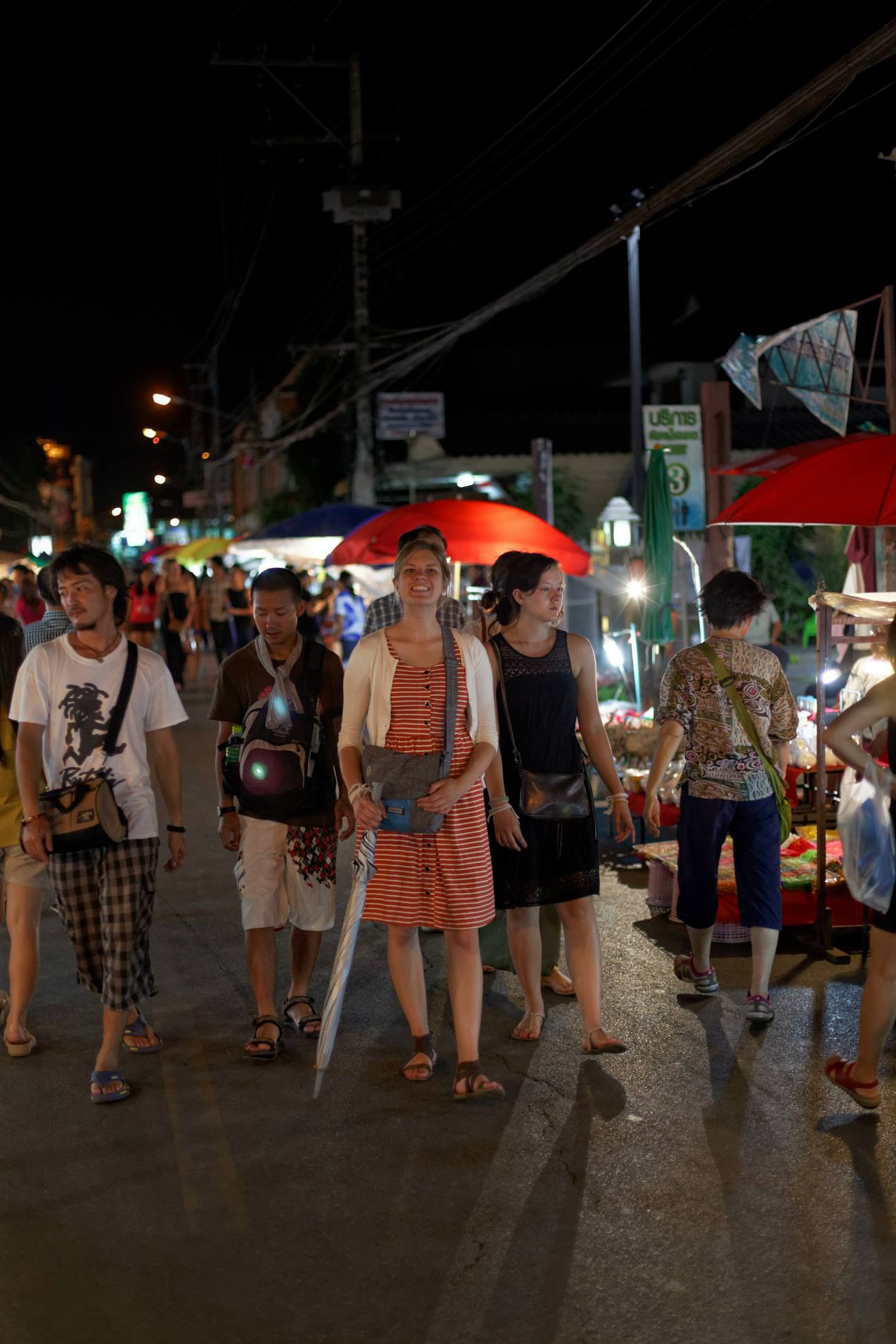


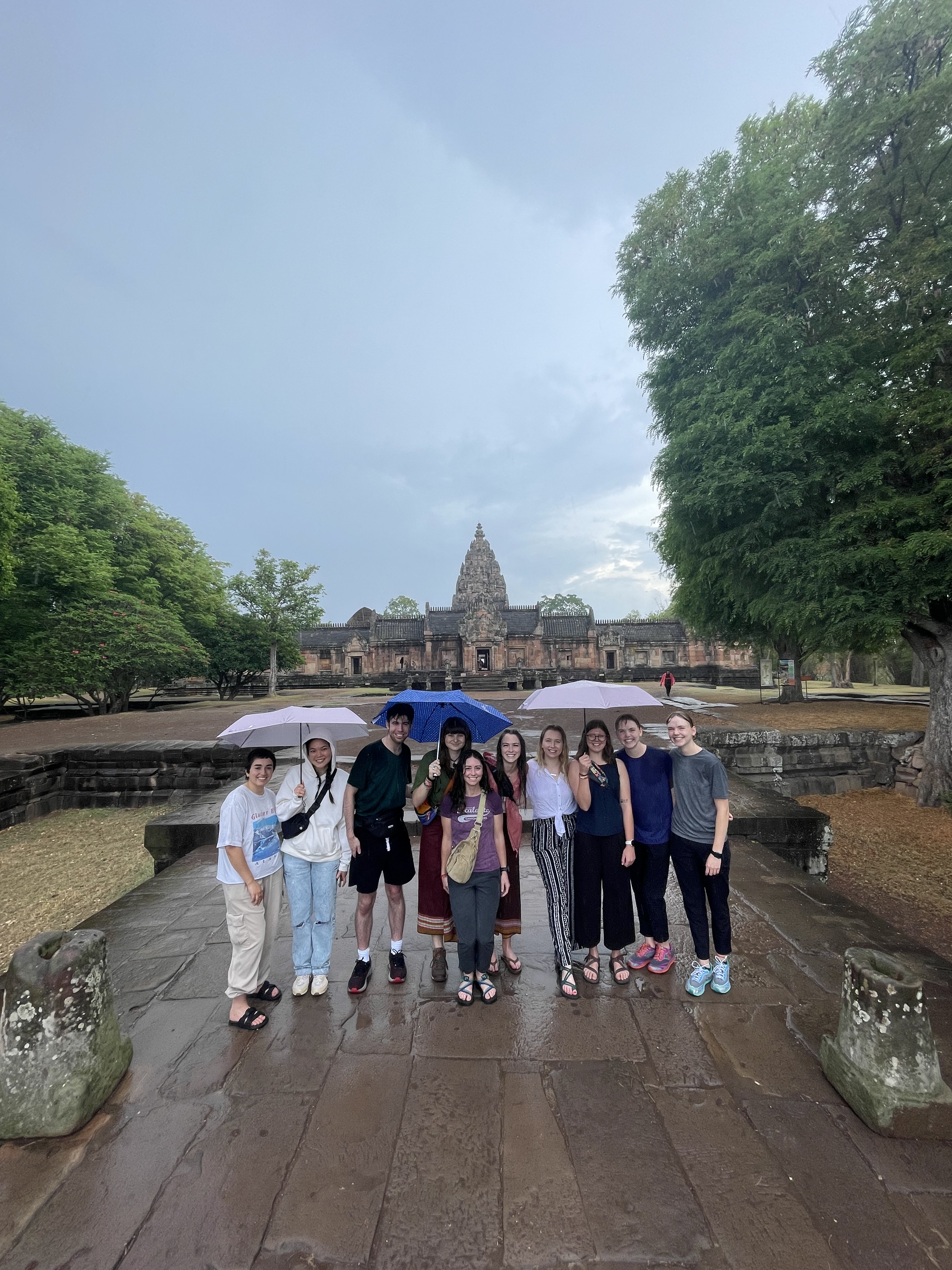
A few other notes on clothing:
Bring clothing that can serve multiple purposes. In fact, everything you bring on a trip like this should serve multiple purposes. For example, don’t bring a nice outfit that you will ONLY use for one night on the town. Bring shirts/blouses that you can work in, but can also be “dressed up” for a nice dinner on the town. For men, short sleeve button down shirts and polo shirts can be used in both situation. Nicer t shirts with no (or subdued) graphics can also work both ways. For women, nicer t shirts and blouses can do the same thing. Skirts and dresses for women are particularly versatile and cool. Make sure the ones for the school are on the longer side. You can use accessories to “dress up” outfits. Shawls, scarves, and Pashimas are great for this; they can be worn sarong-style, over the shoulders to dress things up, or as an insulating layer if it gets cool. Belts, hats, jewelry (keep the expensive stuff at home), and even small handbags also work well.
You really don’t need more than two pairs of shoes. You will spend 80% of the time in Chacos/Tevas or in flip-flops/sandals. Not only are they cool, they are easy to take on and off, which is important, because anytime you enter a home (or even a business), you have to take off your shoes. However, you definitely need to bring at least one pair of closed-toe shoes. A light hiking shoe would be ideal, or a running shoe, especially if you plan on exercising. You can also purchase shoes relatively cheaply in Thailand.
Bring a few pairs of socks. You aren’t going to wear socks very often. But you might. Bring 3-4 pairs of light socks. For the flight, compression socks are very useful. Many of you will experience swelling feet during the long flight and the days immediately following the flight. Compression socks will help prevent that.
Bring enough clothing for seven days. We will be able to do laundry at least every 4-5 days, sometimes more frequently. Laundry is included in the trip fee, but any laundry that you have to do in between is your responsibility. You might want to buy some laundry detergent while we’re there and do your own in the hotel room if you need to.
Pick fabrics that will dry quickly and not smell too bad. That means minimize cotton, and maximize wool or synthetics. Cotton is nice, but it takes forever to dry, and doesn’t smell great after sweating in it for a couple of days. Denim is even worse; it may take days for jeans to fully air dry. Synthetic materials dry very quickly, and are typically treated so that they do not retain odors. Even better than synthetics is merino wool, which is very breathable, drys quickly, and does not retain odors. However, merino wool clothing is usually much more expensive. If you do plan on traveling a lot, however, it may be a nice investment.
Bring enough underwear for seven or more days. What you bring is up to you; bring what’s comfortable. Underwear is relatively light and compact, so it’s one item that you can overpack.
Skirts are extremely practical for women. Longer skirts are extremely versatile when traveling abroad. You can work in them (in fact, in most of the world, women work in skirts), they are appropriate for more formal settings, they are cool, they are easy to care for, and are fashionable. Skirts shouldn’t be too short. When in doubt, be conservative.
Polo shirts are also practical. You can work in them, wear them casually while being a tourist, and dress them up if you have to. Button down short sleeve collared shirts are also similarly practical, but try to avoid the really loud, obnoxious patterns.
You will sweat. A lot. Keep that in mind when picking colors or fabrics. Light colors and patterns hide sweat better than dark colors. But lighter colors also show more dirt.
Bring a light fleece sweater. It can get cold indoors, when the AC is blasting. It can also be cold in the villages, especially in the evenings. Fleece is best, since it is synthetic, it dries quickly, and is very light.
A raincoat isn’t entirely necessary. A cheap plastic poncho works fine. Leave the $500 Gore Tex super shell at home. It’s so humid that waterproof-breathable fabrics simply won’t breathe. Bring a cheaper rain jacket if you wish. Or buy an umbrella when you get there.
A small sewing kit is useful. At the very least, some safety pins and tape can at least temporarily fix clothing.
Bring a minimum of accessories. You don’t need three belts, two hats, three sunglasses, three purses, etc. Definitely bring one pair of good sunglasses (UVA, UVB, UVC protection). Bring one belt. Bring a sun hat or a baseball cap (or buy one there). A scarf is useful to dress up an outfit or just stay warm in the van when the AC is blasting. Keep expensive jewelry and watches at home. A bandana or a Buff or two is handy to keep sweat off.
Anything else? If I missed anything, chime in!
 May Term Thailand
Leave a comment